
lbanner
0%

Table of Contents

Fashion glove manufacturers are critical components of the global apparel industry, evolving beyond mere protection to become significant fashion statements. These manufacturers cater to a diverse range of needs, from high-end designer collaborations to mass-market production, impacting economies and trends worldwide. Understanding the intricacies of this industry, from material sourcing to ethical labor practices, is paramount for both businesses and consumers alike.

The global market for fashion gloves is experiencing steady growth, driven by increasing disposable incomes, evolving fashion preferences, and a heightened awareness of hand protection. According to industry reports, the global gloves market was valued at USD 13.8 billion in 2023 and is projected to reach USD 17.5 billion by 2030. This growth underscores the increasing demand for both functional and fashionable gloves, necessitating a deep understanding of the leading fashion glove manufacturers and their capabilities.

The success of fashion glove manufacturers hinges on their ability to adapt to changing consumer demands, embrace sustainable practices, and maintain competitive pricing. This requires a nuanced understanding of global supply chains, material innovations, and efficient production techniques, making the study of this industry essential for professionals in fashion, manufacturing, and international trade.

fashion glove manufacturers

The Importance of Fashion Glove Manufacturers
fashion glove manufacturers

Fashion glove manufacturers play a pivotal role in translating design concepts into tangible products that enhance personal style and provide functional benefits. Their expertise encompasses material selection, pattern making, stitching techniques, and quality control, all of which contribute to the final aesthetic and durability of the gloves. The expertise of these manufacturers is essential for fashion houses seeking to deliver high-quality accessories.

Furthermore, these manufacturers are increasingly expected to prioritize ethical and sustainable practices, responding to growing consumer demand for responsible sourcing and production. This includes utilizing eco-friendly materials, minimizing waste, and ensuring fair labor conditions throughout the supply chain, solidifying their importance in a conscious consumer market.

Defining Fashion Glove Manufacturers

Fashion glove manufacturers are companies specializing in the design, production, and distribution of gloves intended primarily for aesthetic or stylistic purposes, as opposed to purely functional or industrial applications. While functionality remains important, the emphasis lies on aligning with current fashion trends, utilizing diverse materials, and offering a range of styles to complement various outfits and occasions.

These manufacturers often work closely with fashion designers, brands, and retailers to create custom glove designs or produce large-scale collections. Their capabilities range from traditional hand-stitching techniques to automated production processes, catering to different price points and quality levels. Understanding their role is critical to appreciating the entire fashion accessory ecosystem.

The connection to modern industry extends beyond the fashion world; it impacts leather processing, textile innovation, and global trade networks. Ethical considerations are also paramount, driving manufacturers to adopt sustainable practices and ensure fair labor standards within their operations.

Key Characteristics of Leading Manufacturers

Leading fashion glove manufacturers distinguish themselves through several key characteristics, including a strong emphasis on quality control, innovative design capabilities, and a commitment to ethical and sustainable practices. They prioritize utilizing premium materials, employing skilled artisans, and investing in advanced production technologies.

Furthermore, responsiveness to market trends and the ability to offer customization options are critical. Top manufacturers can quickly adapt to changing consumer preferences, provide bespoke designs for fashion brands, and maintain a reliable supply chain to meet fluctuating demands. They also embrace digital technologies to streamline operations and enhance communication with clients.

Finally, a robust understanding of international trade regulations, import/export procedures, and logistics management is essential for navigating the complexities of the global marketplace. Successful fashion glove manufacturers operate with transparency, accountability, and a long-term vision for growth and sustainability.

Core Components and Production Processes

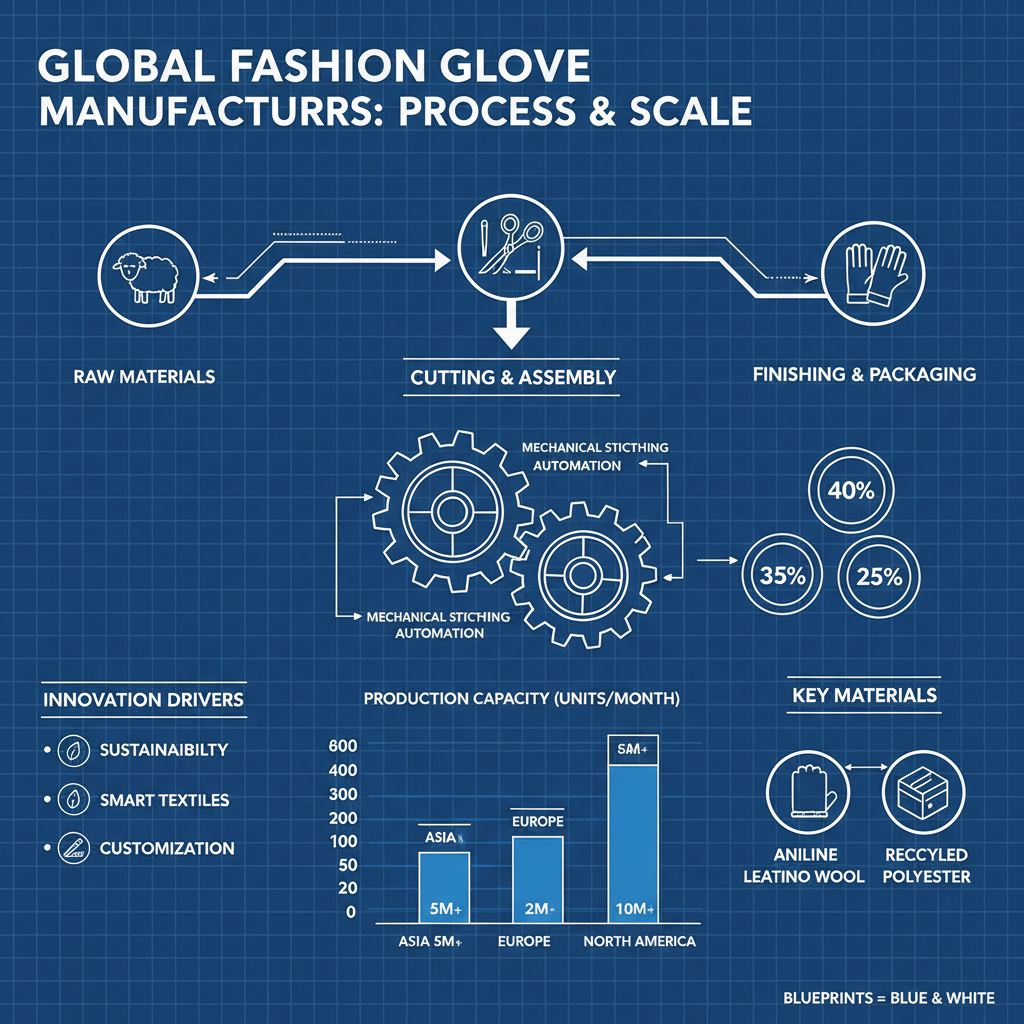
The production of fashion gloves involves a series of interconnected processes, starting with material sourcing and culminating in finished product packaging. Key components include leather (sheepskin, goatskin, deerskin), textiles (silk, wool, cotton, synthetic blends), linings (cashmere, silk, fleece), and embellishments (buttons, beads, embroidery).

The core processes typically include pattern making, cutting, stitching, shaping, finishing, and quality control. Advanced manufacturers employ CAD/CAM systems for precision pattern design and automated cutting machines for efficiency. Stitching techniques vary depending on the glove style and material, ranging from simple straight stitches to intricate decorative seams.

Production Efficiency of Fashion Glove Manufacturers

Global Applications and Market Segments

Fashion gloves find applications across a wide range of market segments, including luxury fashion, contemporary apparel, bridal wear, and specialized accessory retailers. Demand is particularly strong in regions with distinct seasonal changes, such as Europe and North America, where gloves are essential for both style and warmth.

In the luxury sector, fashion glove manufacturers collaborate with renowned designers to create exclusive collections using premium materials and intricate craftsmanship. In the mass market, these manufacturers produce more affordable gloves for a broader consumer base, focusing on trendy designs and seasonal colors.

Advantages and Long-Term Value Proposition

Investing in products from reputable fashion glove manufacturers offers several tangible benefits. High-quality gloves provide superior comfort, durability, and aesthetic appeal, enhancing the overall wearer experience. Sustainable manufacturing practices reduce environmental impact and support ethical labor standards.

From a long-term perspective, a strong brand reputation built on quality and sustainability fosters customer loyalty and drives repeat business. Innovative designs and responsiveness to market trends ensure continued relevance and competitiveness, solidifying the manufacturer’s position within the industry.

The emotional value is also significant; a well-crafted pair of gloves can instill confidence, elevate personal style, and serve as a lasting symbol of quality and sophistication.

Future Trends and Technological Advancements

The future of fashion glove manufacturing will be shaped by several key trends, including the adoption of advanced materials, the integration of smart technologies, and a growing emphasis on circular economy principles. Innovations in leather alternatives, such as plant-based materials, offer sustainable solutions without compromising quality.

The integration of wearable technology, such as touch-sensitive gloves and heated gloves, is expanding the functionality of these accessories. Digital printing and 3D knitting technologies enable customized designs and on-demand production, reducing waste and improving efficiency.

Furthermore, the implementation of blockchain technology can enhance supply chain transparency and traceability, ensuring ethical sourcing and responsible manufacturing practices. The trend towards personalization and customization will continue to drive innovation in design and production methods, benefiting both manufacturers and consumers.

Key Performance Indicators for Fashion Glove Manufacturers

Production Capacity Material Sourcing Score (1-10) Design Innovation Rating (1-10) Sustainability Index (1-10)
50,000 pairs per month 8 7 6
75,000 pairs per month 9 8 7
30,000 pairs per month 6 9 5
60,000 pairs per month 7 6 8
40,000 pairs per month 5 7 9
80,000 pairs per month 10 10 10

FAQS

What factors should I consider when selecting a fashion glove manufacturer?

When choosing a fashion glove manufacturer, prioritize factors like production capacity, material quality, design capabilities, lead times, and adherence to ethical and sustainability standards. Look for manufacturers with a proven track record, positive client testimonials, and a willingness to collaborate on custom designs. It’s also important to verify their certifications and compliance with relevant industry regulations. Thorough due diligence is key to ensuring a successful partnership.

What are the typical lead times for custom glove orders?

Typical lead times for custom glove orders can vary considerably depending on the complexity of the design, the quantity ordered, and the manufacturer’s current workload. Generally, expect a lead time of 6-12 weeks for initial sample development and 8-16 weeks for bulk production. It's crucial to discuss lead times upfront and factor them into your product launch schedule. Express or rush orders may be possible at an additional cost.

What materials are commonly used in fashion glove manufacturing?

Common materials used in fashion glove manufacturing include various types of leather (sheepskin, goatskin, deerskin), textiles (silk, wool, cotton, synthetic blends), and linings (cashmere, silk, fleece). The choice of material depends on the desired aesthetic, functionality, and price point. Sustainable alternatives like plant-based leathers and recycled fabrics are becoming increasingly popular.

How can I ensure ethical and sustainable sourcing of materials?

To ensure ethical and sustainable sourcing, look for manufacturers who are certified by organizations like the Leather Working Group (LWG) or have implemented robust traceability systems. Ask about their supply chain practices, labor standards, and environmental impact mitigation efforts. Prioritizing manufacturers who use eco-friendly materials and minimize waste is crucial for a sustainable product.

What are the typical minimum order quantities (MOQs) for fashion glove manufacturers?

Minimum Order Quantities (MOQs) vary significantly among fashion glove manufacturers. Generally, MOQs can range from 100 to 500 pairs per style and color. Some manufacturers may be willing to negotiate lower MOQs for smaller brands or initial orders, but this often comes with a higher per-unit cost. Discuss MOQs upfront and factor them into your inventory planning.

What quality control measures should I expect from a reputable manufacturer?

A reputable fashion glove manufacturer should have a comprehensive quality control system in place, encompassing all stages of production, from material inspection to final product testing. Expect inspections for defects in materials, stitching, sizing, and overall workmanship. Third-party quality control inspections can also provide an added layer of assurance. Clear communication and documented quality standards are essential.

Conclusion

In conclusion, fashion glove manufacturers are a cornerstone of the global apparel industry, evolving to meet the demands of a rapidly changing market. Their ability to blend artistry, innovation, and ethical practices is crucial for delivering high-quality, stylish, and sustainable products. Understanding their capabilities, challenges, and future trends is vital for brands, retailers, and consumers alike.

Looking ahead, a continued focus on technological advancements, sustainable materials, and transparent supply chains will be essential for long-term success. By embracing these principles, fashion glove manufacturers can solidify their position as key players in the fashion industry, contributing to a more responsible and innovative future. Visit our website at hmdglove.com to learn more about our manufacturing solutions.

David Miller

David Miller

David Miller is the Head of Product Assurance at Shijiazhuang HongMeiDa Trading Co., Ltd. With over 15 years of experience in quality control and manufacturing, David ensures all gloves meet stringent ISO9001 standards. He’s deeply involved in the raw material selection process – prioritizing 100% long-staple cotton, polyester, and spandex blends – and oversees rigorous testing for wear resistance, cut resistance, and temperature protection. David is passionate about delivering consistently high-quality hand protection solutions to our clients. He often contributes to industry publications discussing the importance of proper glove selection for various work environments and has spearheaded several initiatives to improve our functional testing procedures. He joined HongMeiDa in 2012 and consistently strives to elevate our product performance.
Previous Expert esd gloves manufacturer for Electronics Protection and Quality Control
Next Comprehensive Guide to Hand Gloves Manufacturing Company and Industry Trends

If you are interested in our products, you can choose to leave your information here, and we will be in touch with you shortly.