Janitorial gloves are an indispensable component of hygiene and safety protocols across a vast spectrum of industries and applications. From healthcare facilities and food processing plants to industrial cleaning and laboratory settings, these gloves provide a critical barrier against contamination, protecting both workers and the public. The global demand for janitorial gloves is steadily increasing, driven by heightened awareness of infection control, stringent regulatory standards, and a growing emphasis on workplace safety. Understanding the nuances of these gloves – their materials, functionalities, and applications – is crucial for ensuring effective protection and maintaining optimal hygiene levels.
The importance of janitorial gloves extends beyond mere cleanliness. In industries like food service, they prevent the transmission of foodborne illnesses, safeguarding consumer health. In healthcare, they are vital in preventing the spread of hospital-acquired infections, a significant concern worldwide. Globally, organizations like the World Health Organization (WHO) and the Centers for Disease Control and Prevention (CDC) actively promote the use of appropriate personal protective equipment (PPE), including janitorial gloves, to mitigate health risks. The economic impact of improved hygiene practices, facilitated by the proper use of janitorial gloves, is substantial, reducing healthcare costs and enhancing productivity.
Furthermore, advancements in materials and manufacturing are leading to more effective and sustainable janitorial gloves. This evolution addresses the challenges of durability, comfort, and environmental impact, making these protective tools more user-friendly and eco-conscious. The demand for specialized gloves, such as those resistant to specific chemicals or providing enhanced tactile sensitivity, is also growing, reflecting the diverse needs of various industries. A thorough understanding of these developments is paramount for professionals seeking optimal solutions for their specific hygiene and safety requirements.

The Global Significance of Janitorial Gloves
Janitorial gloves play a pivotal role in safeguarding public health and maintaining hygiene standards on a global scale. The demand for these protective tools is intrinsically linked to factors like population density, industrial growth, and increasing awareness of infectious disease control. According to the UN, rapidly urbanizing areas often face heightened challenges in maintaining sanitation, making janitorial gloves a critical resource for mitigating health risks. The global PPE market, which includes janitorial gloves, is projected to continue its upward trajectory, driven by stringent regulations and a proactive approach to preventative healthcare.
Moreover, the widespread adoption of standardized hygiene protocols in industries such as food processing and healthcare has further solidified the importance of janitorial gloves. Organizations like ISO (International Organization for Standardization) have established guidelines for quality management and safety, often requiring the use of appropriate hand protection. These standards not only ensure product safety but also foster consumer trust and confidence. The availability of cost-effective and reliable janitorial gloves is, therefore, paramount for enabling businesses and institutions to adhere to these crucial guidelines.
Defining Janitorial Gloves
Janitorial gloves are protective coverings worn on the hands to prevent contamination and protect both the wearer and the surfaces they interact with. They are commonly made from materials such as nitrile, latex, vinyl, and neoprene, each offering varying levels of resistance to chemicals, punctures, and abrasions. Unlike surgical gloves, which prioritize sterility, janitorial gloves primarily focus on durability and broad-spectrum protection against common cleaning agents and environmental hazards.
Their connection to modern industry is undeniable; they are fundamental in maintaining cleanliness and safety in a wide array of sectors. In the context of humanitarian needs, janitorial gloves are often included in disaster relief kits, assisting in sanitation efforts following natural disasters or outbreaks of disease. Providing basic hygiene tools, like janitorial gloves, can significantly reduce the spread of infection and improve overall public health in crisis situations.
Ultimately, a janitorial glove serves as a critical barrier, safeguarding workers and consumers alike, contributing to a safer and more hygienic environment. They represent a fundamental aspect of preventative measures in diverse settings, from routine cleaning tasks to critical contamination control procedures.
Key Factors Influencing Janitorial Glove Performance
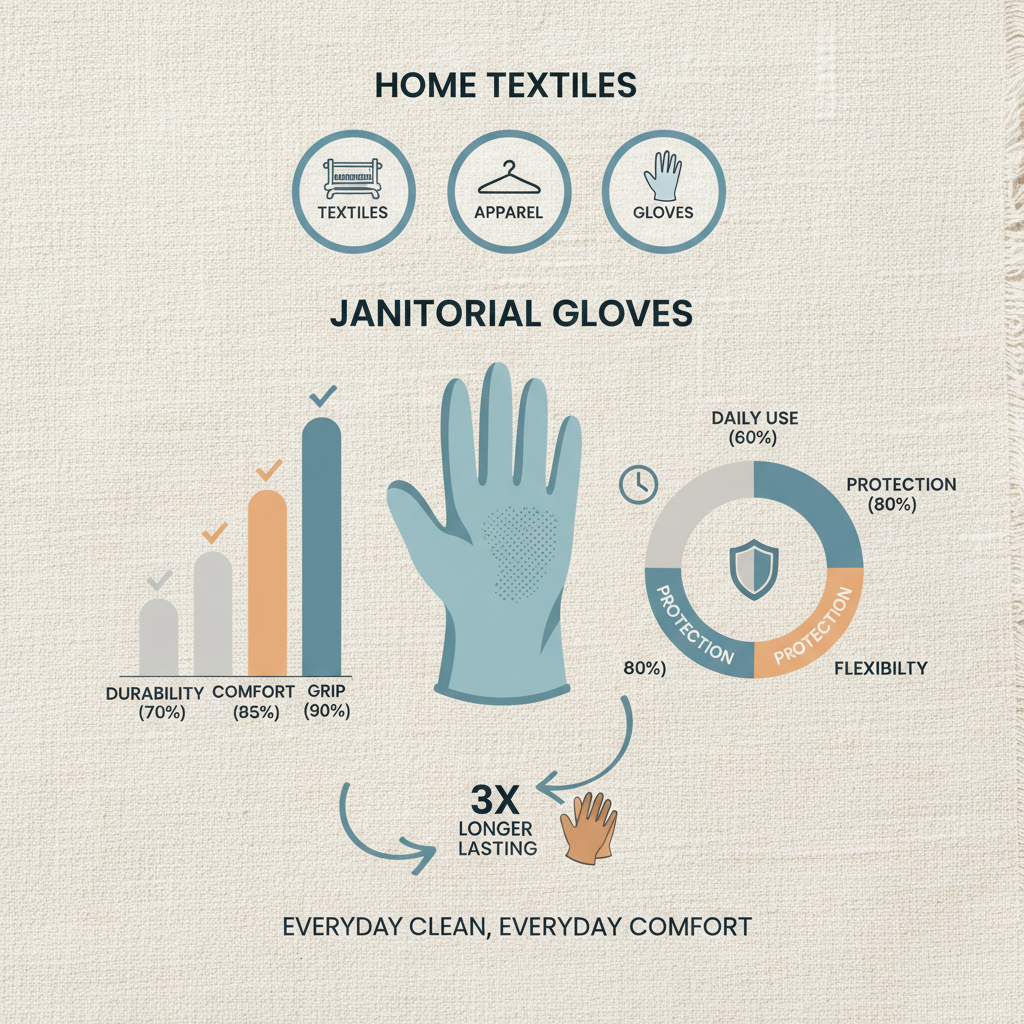
Several key factors determine the effectiveness and suitability of janitorial gloves for specific applications. Durability is paramount, ensuring the gloves can withstand repeated use and resist punctures or tears, preventing exposure to hazardous materials. The thickness and material composition directly impact durability, with nitrile gloves generally offering superior resistance compared to latex or vinyl.
Chemical Resistance is crucial in environments where exposure to harsh cleaning agents is common. Different materials exhibit varying levels of resistance to specific chemicals, so selecting the appropriate glove type is essential to prevent degradation and maintain protection. For instance, neoprene gloves are well-suited for handling oils and solvents, while nitrile gloves offer broad-spectrum resistance to many chemicals.
Comfort and Dexterity play a significant role in user compliance and efficiency. Gloves that are too stiff or restrictive can hinder performance and lead to fatigue. Features like textured fingertips and ergonomic designs can enhance grip and tactile sensitivity, improving the user’s ability to perform tasks effectively. Cost-Effectiveness is also an important consideration, particularly for organizations with large-scale cleaning operations. Balancing performance with affordability is crucial for maintaining a sustainable supply of janitorial gloves. Finally, Size and Fit must be appropriate to ensure proper protection and dexterity.
Diverse Applications of Janitorial Gloves
The applications of janitorial gloves are incredibly diverse, spanning numerous industries and scenarios. In Healthcare, they are vital for maintaining aseptic environments, preventing the spread of infections during patient care, and protecting healthcare workers from exposure to hazardous substances. From cleaning hospital rooms to handling biohazardous waste, reliable hand protection is paramount.
Within the Food Service Industry, janitorial gloves are essential for ensuring food safety and preventing contamination during food preparation, handling, and serving. They help maintain hygiene standards and comply with food safety regulations, protecting consumers from foodborne illnesses. In Industrial Cleaning, they provide a barrier against harsh chemicals, abrasive materials, and physical hazards encountered during cleaning and maintenance tasks.
Furthermore, janitorial gloves are widely used in Laboratory Settings for handling chemicals, biological samples, and sensitive equipment. They protect researchers from exposure to hazardous substances and maintain the integrity of experiments. In post-disaster relief operations, providing janitorial gloves alongside other sanitation supplies is a crucial step in preventing the spread of disease and restoring hygiene to affected communities.
Janitorial Glove Performance by Material
Advantages and Long-Term Value of High-Quality Janitorial Gloves
Investing in high-quality janitorial gloves yields a multitude of tangible benefits. From a cost perspective, durable gloves reduce the frequency of replacements, lowering overall expenses. Furthermore, by preventing contamination and illness, they minimize healthcare costs and lost productivity. The enhanced protection they provide contribute significantly to sustainability by reducing waste associated with frequent glove changes and promoting safer working conditions.
The social impact is equally important. Providing reliable hand protection demonstrates a commitment to worker safety and well-being, fostering a positive work environment. This fosters trust and confidence among employees and stakeholders. The inherent reliability of well-made gloves ensures consistent performance and minimizes the risk of exposure to hazardous substances, protecting both individuals and the public.
Future Trends and Innovations in Janitorial Glove Technology
The future of janitorial glove technology is poised for significant advancements. Green materials and biodegradable options are gaining traction, addressing the growing demand for environmentally friendly solutions. Researchers are exploring innovative materials derived from renewable resources, reducing the environmental footprint of glove production and disposal.
Digital transformation is also playing a role, with the development of smart gloves equipped with sensors to detect chemical exposure or breaches in protection. Automation in manufacturing processes is improving glove quality and consistency while reducing production costs. These innovations aim to create more sustainable, safe, and efficient janitorial gloves for a wide range of applications.
Challenges and Solutions in Janitorial Glove Utilization
Despite their widespread use, several challenges remain in maximizing the effectiveness of janitorial gloves. Proper disposal is a significant concern, as improper handling can contribute to environmental pollution. Implementing robust recycling programs and promoting the use of biodegradable materials can mitigate this issue.
Allergic reactions to latex remain a challenge for some users. Offering alternative materials like nitrile and neoprene ensures that individuals with latex allergies have access to suitable hand protection. Ensuring proper fit and training is also essential to maximize glove performance and prevent contamination. Providing clear guidelines on glove selection, donning, and doffing procedures can significantly improve safety and hygiene practices.
Finally, addressing cost constraints without compromising quality requires strategic sourcing and exploring innovative materials that offer a balance between performance and affordability. Utilizing long-term supply agreements and partnering with reputable manufacturers can help organizations secure reliable and cost-effective janitorial gloves.
Summary of Janitorial Glove Material Properties and Considerations
| Material Type |
Chemical Resistance |
Cost (Scale 1-5) |
Common Applications |
| Nitrile |
Excellent |
3 |
Healthcare, Food Service, Industrial Cleaning |
| Latex |
Good |
2 |
General Cleaning, Light Duty Tasks |
| Vinyl |
Fair |
1 |
Low-Risk Environments, Food Handling |
| Neoprene |
Excellent (Oils & Solvents) |
4 |
Industrial, Automotive, Chemical Handling |
| Polyethylene |
Limited |
1 |
Light Duty Cleaning, Food Preparation |
| Blended Materials |
Variable |
2-4 |
Specific Application Needs |
FAQS
Nitrile gloves offer superior chemical resistance and are a better choice for those with latex allergies. Latex gloves generally provide better tactile sensitivity but can cause allergic reactions in some individuals. Both are effective for general cleaning, but nitrile is often preferred for its broader protection and hypoallergenic properties. Choosing the right material depends on the specific task and potential exposure risks.
The frequency of glove replacement depends on the level of wear and tear and the nature of the task. Gloves should be replaced immediately if they are punctured, torn, or show signs of degradation. Even without visible damage, gloves should be replaced regularly, especially during prolonged use or when handling hazardous materials, to maintain optimal protection. Following manufacturer's guidelines is also important.
Unfortunately, most disposable janitorial gloves are not easily recyclable due to their material composition and potential contamination. However, some manufacturers are developing recyclable or biodegradable glove options. Proper disposal in designated waste streams is crucial to minimize environmental impact. Checking with local waste management facilities for specific recycling guidelines is recommended.
Selecting the correct glove size is vital for ensuring a comfortable fit and optimal dexterity. Measure the circumference of your hand and refer to the manufacturer's sizing chart to determine the appropriate size. Gloves that are too small can restrict movement, while gloves that are too large can compromise protection. A snug, but not constricting, fit is ideal.
To maximize glove lifespan, avoid prolonged exposure to harsh chemicals, sharp objects, and abrasive materials. Store gloves in a cool, dry place away from direct sunlight and heat. Inspect gloves for damage before each use and discard any that are compromised. Proper donning and doffing techniques can also help prevent tears and prolong their usability.
The best glove material for handling specific chemicals depends on the chemical's properties. Nitrile gloves offer broad-spectrum chemical resistance, while neoprene is ideal for oils and solvents. Always consult a chemical resistance chart provided by the glove manufacturer to ensure compatibility and adequate protection. Using the wrong glove material can lead to degradation and potential exposure.
Conclusion
In conclusion, janitorial gloves are far more than a simple cleaning accessory. They are a critical component of public health, workplace safety, and environmental protection. Understanding their diverse applications, key performance factors, and emerging innovations is essential for professionals across a wide range of industries. Investing in high-quality gloves and implementing proper usage protocols yields significant long-term benefits, from reduced healthcare costs to enhanced worker well-being.
Looking ahead, the focus will undoubtedly shift towards sustainable materials, smart technologies, and improved disposal methods. By embracing these advancements, we can ensure that janitorial gloves continue to play a vital role in safeguarding our health and preserving our planet. Visit our website at www.hmdglove.com to explore our comprehensive selection of janitorial gloves and find the perfect solution for your specific needs.