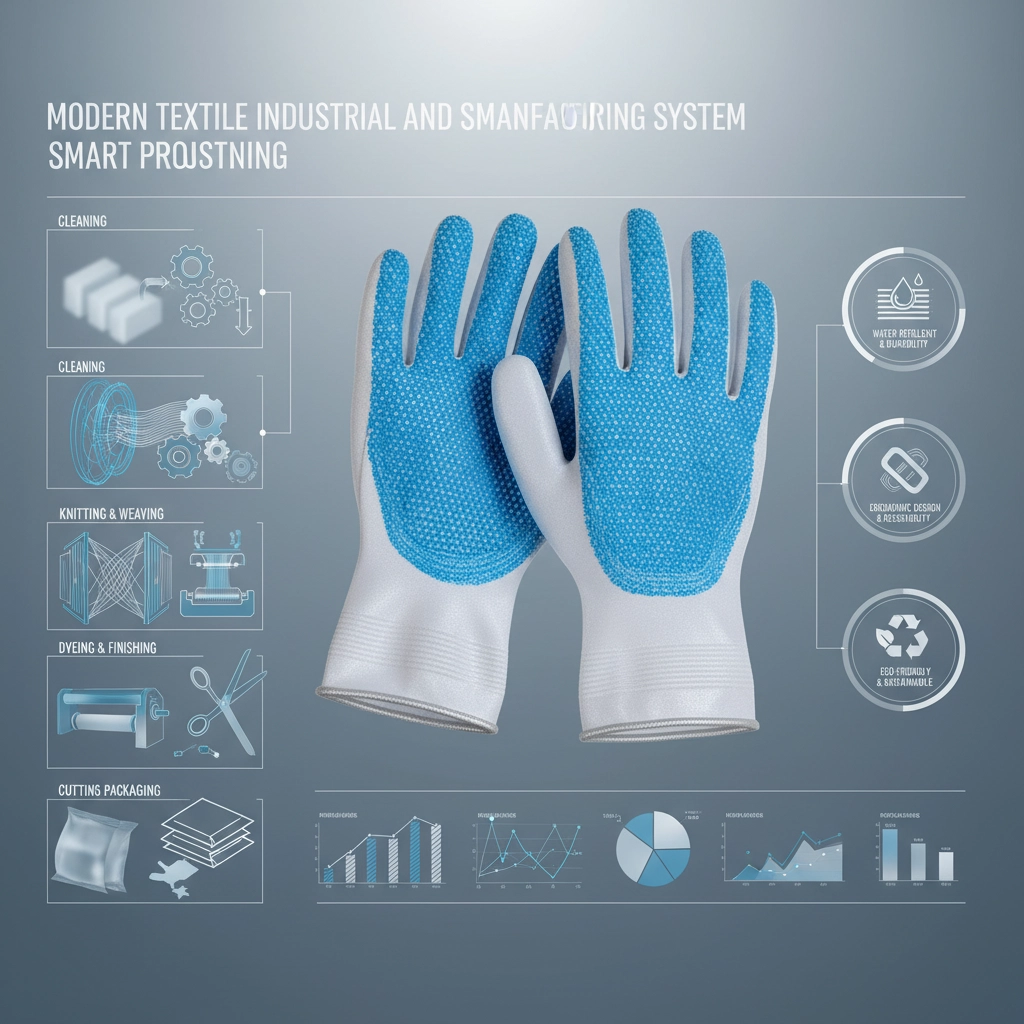
In an era where environmental consciousness is no longer optional, the shift toward sustainable household and industrial maintenance has brought cleaning gloves reusable to the forefront of consumer demand. Unlike single-use plastic alternatives that contribute to landfill overflow, high-quality reusable gloves offer a durable barrier against harsh chemicals while significantly reducing the ecological footprint of daily sanitation.
The global market for protective handwear is evolving, moving away from disposable convenience toward long-term reliability and material innovation. By integrating advanced polymers and ergonomic designs, cleaning gloves reusable provide not only physical protection but also a cost-effective strategy for both homeowners and professional cleaning services.
Understanding the technical specifications of these products—from tensile strength to chemical permeability—is essential for choosing the right gear. This guide explores the industrial standards and practical advantages of adopting cleaning gloves reusable, ensuring a balance between human safety and planetary health.

Global Context of Reusable Protective Handwear
The global demand for cleaning gloves reusable has surged as international regulatory bodies, including ISO and various environmental protection agencies, push for a reduction in single-use plastics. With millions of tons of nitrile and latex waste entering landfills annually, the industrial shift toward reusable alternatives is a critical component of the circular economy.
This transition is not merely about waste reduction but also about enhancing occupational health. Professional cleaners and industrial workers face chronic exposure to corrosive agents; thus, the adoption of heavy-duty cleaning gloves reusable ensures a more consistent and reliable barrier than thin, disposable films.
Defining High-Performance Reusable Cleaning Gloves
At its core, cleaning gloves reusable refer to protective handwear engineered from reinforced materials—such as thickened nitrile, neoprene, or high-grade PVC—designed to be washed and reused multiple times without compromising their structural integrity. Unlike their disposable counterparts, these gloves feature reinforced cuffs and textured grips to withstand repetitive mechanical stress.
In the context of modern industry, these gloves bridge the gap between basic hygiene and professional-grade personal protective equipment (PPE). They are designed to meet specific permeability standards, ensuring that chemicals do not seep through the material over time, which is a common failure point in cheaper, single-use options.
From a humanitarian and social perspective, providing durable cleaning gloves reusable to sanitation workers in developing regions improves dignity and safety. By reducing the recurring cost of PPE, organizations can allocate resources more effectively while maintaining a higher standard of biological and chemical protection.
Core Components of Glove Durability
The effectiveness of cleaning gloves reusable is primarily determined by the polymer density. High-density materials prevent the "micro-tearing" that typically occurs when gloves are exposed to abrasive surfaces or sharp cleaning tools, ensuring the glove remains airtight and watertight.
Another critical factor is the interior lining. Many premium cleaning gloves reusable incorporate a flocked cotton or microfiber lining. This not only absorbs perspiration to prevent skin irritation but also makes the gloves easier to put on and take off, extending the lifespan of the glove by reducing stress on the wrist opening.
Finally, chemical resistance is a non-negotiable component. Whether it is resistance to bleach, ammonia, or industrial degreasers, the chemical composition of cleaning gloves reusable is calibrated to prevent swelling or degradation when in contact with caustic substances.
Performance Metrics and Material Efficiency
When evaluating cleaning gloves reusable, industry experts look at the "Breakthrough Time"—the period it takes for a specific chemical to permeate the material. Reusable gloves typically offer significantly longer breakthrough times than disposable ones, making them the superior choice for deep-cleaning tasks.
Beyond chemical safety, the mechanical grip and tactile sensitivity are measured to ensure that users can handle slippery objects without accidents. The balance between thickness (for protection) and flexibility (for dexterity) is what defines a high-quality reusable glove.
Material Performance Comparison for Reusable Cleaning Gloves
Global Applications Across Diverse Industries
In the hospitality sector, specifically within large-scale hotel chains in Europe and North America, cleaning gloves reusable are mandated to reduce operational costs and meet corporate sustainability goals. By switching from daily disposable gloves to weekly reusable ones, hotels can reduce their plastic waste by up to 80%.
Similarly, in medical facility maintenance, where sterilization is paramount, heavy-duty cleaning gloves reusable are used for scrubbing floors and walls with potent disinfectants. These environments require gloves that can be sanitized themselves without losing their integrity, a feature inherent in high-grade reusable polymers.
Long-Term Value and Sustainability Impacts
The logical advantage of cleaning gloves reusable is the dramatic reduction in "cost-per-use." While the initial purchase price is higher than a box of disposables, the lifespan of a single pair of reusable gloves often equals hundreds of disposable pairs, leading to significant long-term financial savings.
Emotionally, the use of sustainable products fosters a sense of responsibility and trust. Consumers and employees feel more empowered when they use tools that do not actively harm the environment. This psychological shift encourages a culture of care—not just for the surfaces being cleaned, but for the planet at large.
Furthermore, the reliability of these gloves enhances safety. The thickness provided by cleaning gloves reusable offers a psychological and physical safety net, reducing the anxiety associated with handling hazardous chemicals and preventing the dermatitis often caused by the thin, porous nature of low-grade disposables.
Future Innovations in Eco-Friendly Textiles
The future of cleaning gloves reusable lies in biodegradable polymers. Researchers are currently developing "bio-nitrile" and plant-based elastomers that offer the same chemical resistance as petroleum-based plastics but decompose naturally at the end of their lifecycle, effectively closing the loop of sustainability.
Digital transformation is also entering the PPE space. We are seeing the emergence of "smart gloves" that can detect chemical breaches in real-time through integrated sensors, alerting the user the moment a leak occurs. This fusion of textile science and IoT will redefine the safety standards for cleaning gloves reusable.
Additionally, automation in manufacturing allows for 3D-knitted reinforced zones, meaning gloves can be thicker in the fingertips and palms while remaining thin and flexible in the joints. This precision engineering maximizes the longevity of cleaning gloves reusable while enhancing user comfort.
Comparison of Reusable Glove Materials and Lifespans
| Material Type |
Average Lifespan |
Chemical Resistance |
Eco-Score (1-10) |
| Thickened Nitrile |
3-6 Months |
High (Oils/Acids) |
7 |
| Natural Latex |
1-3 Months |
Medium (Water/Soap) |
8 |
| Neoprene |
6-12 Months |
Very High (Solvents) |
6 |
| Heavy-Duty PVC |
4-8 Months |
High (Bleach/Alkali) |
5 |
| Food-Grade Silicone |
12-24 Months |
Medium (Heat/Water) |
9 |
| Bio-Based Polymers |
2-5 Months |
Medium (General) |
10 |
FAQS
To maintain cleaning gloves reusable, rinse them thoroughly with clean water after every use to remove chemical residues. For deep cleaning, turn them inside out and wash with mild soap and lukewarm water. Avoid using harsh solvents on the exterior as this may degrade the polymer. Always hang them to air dry in a well-ventilated area, away from direct sunlight, to prevent the material from becoming brittle.
Yes, absolutely. While a pack of disposable gloves is cheaper upfront, you may go through hundreds of pairs a year. A single high-quality pair of cleaning gloves reusable can last several months. When you calculate the cost per cleaning session, the reusable option typically costs a fraction of the disposable alternative, while also eliminating the recurring need for procurement.
For those with latex allergies or sensitive skin, nitrile or silicone cleaning gloves reusable are the best choice. Nitrile is hypoallergenic and provides a strong barrier. Additionally, look for gloves with a "flocked lining" (cotton coating), which prevents the rubber from sticking to the skin and absorbs moisture, reducing the risk of contact dermatitis.
You should replace your cleaning gloves reusable immediately if you notice any pinholes, cracks, or thinning in the fingertips. Another sign is "stiffening" or loss of elasticity, which indicates the polymer is breaking down due to chemical exposure. If you feel any moisture reaching your skin during use, the glove's integrity is compromised and it should be recycled.
It depends on the material. For heavy industrial use, you should choose neoprene or specialized PVC cleaning gloves reusable, which are designed for high chemical resistance. Always check the manufacturer's chemical compatibility chart to ensure the material can withstand the specific acid or solvent you are using.
While they are made of polymers, cleaning gloves reusable are significantly more eco-friendly than disposables because they reduce the volume of waste. One pair of reusable gloves replaces hundreds of single-use items. To maximize the eco-benefit, choose gloves made from recycled materials or bio-based polymers and dispose of them through specialized plastic recycling programs.
Conclusion
The transition to cleaning gloves reusable represents a critical intersection of occupational safety and environmental stewardship. By prioritizing material durability, chemical resistance, and ergonomic design, these gloves offer a superior alternative to disposable handwear, reducing both operational costs and ecological damage. From the reinforced polymers that protect our skin to the sustainable lifecycle that protects our planet, the value of reusable solutions is undeniable.
As we look toward a future of biodegradable textiles and smart PPE, the adoption of sustainable cleaning practices will become the industry standard. We encourage professionals and homeowners alike to invest in high-quality, durable gear that balances efficiency with ethics. To explore our full range of protective solutions, visit our website: www.hmdglove.com