Unveiling the Superiority of Microfiber Gloves
In an industrial landscape where precision, cleanliness, and efficiency are paramount, the humble yet powerful microfiber gloves have emerged as indispensable tools. Far from a mere accessory, these specialized gloves represent a significant leap in material science applied to practical utility. Their unique composition, typically a blend of polyester and polyamide, allows for an extraordinarily fine fiber structure – often less than one-tenth the diameter of a human hair. This microscopic architecture is the secret behind their unparalleled performance. Unlike traditional cotton or latex gloves, microfiber gloves boast a remarkable capacity for trapping dust, dirt, and microscopic particles, not merely pushing them around. This advanced particulate capture mechanism makes them critical for sensitive environments and tasks where even the slightest contamination can compromise quality or functionality.
The global market for cleaning and specialty textiles, within which microfiber products hold a significant share, is projected to exceed $150 billion by 2027, driven by increasing demands for sterile environments, high-tech manufacturing, and detailed surface care. Microfiber gloves contribute substantially to this growth, with their market segment expanding due to heightened awareness of cross-contamination risks and the need for scratch-free handling in sectors ranging from electronics to automotive. Their non-abrasive nature, coupled with an inherent ability to perform effectively without harsh chemical agents, underscores their value proposition: superior cleaning and handling performance with reduced environmental impact and enhanced user safety. This introductory overview sets the stage for a deeper exploration into what makes these gloves an essential component in modern operational protocols.
The Unmatched Technical Prowess and Performance Benefits
The technical superiority of microfiber gloves stems from their meticulously engineered structure. Each individual fiber is split, creating a multitude of microscopic "hooks" and "loops" that vastly increase the surface area. This intricate network is not just for show; it's the fundamental design element enabling microfiber to absorb up to seven times its weight in liquid and, more critically, to physically capture and hold dust, allergens, and bacteria. Traditional materials often just redistribute contaminants, but microfiber's capillary action and electrostatic charge – generated by friction during use – actively draw and trap particles within its structure. This results in an unprecedented level of cleanliness, with studies demonstrating that specialized microfiber materials can remove up to 99.9% of bacteria from surfaces, a stark contrast to conventional cotton, which typically achieves only around 30% removal.
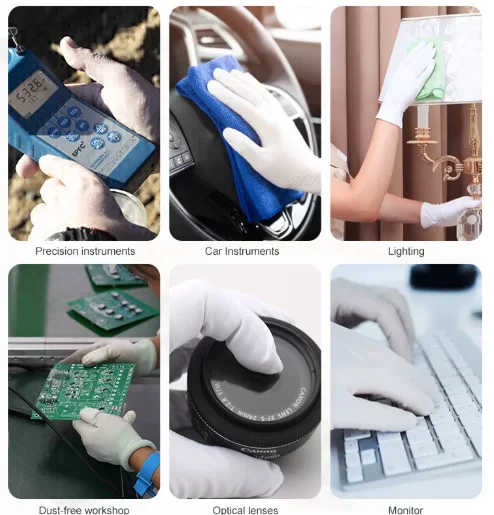
Beyond their exceptional cleaning capabilities, the finely woven nature of microfiber makes these gloves inherently lint-free, a critical characteristic for environments requiring absolute particulate control, such as cleanrooms or electronics assembly lines. Their soft, non-abrasive texture ensures scratch-free handling of delicate surfaces, including optical lenses, touchscreens, polished metals, and painted finishes. This protective quality significantly reduces product damage and associated costs. Furthermore, microfiber gloves exhibit superior durability and longevity compared to their cotton or latex counterparts. With proper care, they can withstand hundreds of wash cycles without losing their efficacy, offering a lower total cost of ownership over time. This combination of advanced particulate capture, scratch prevention, and extended lifespan positions microfiber gloves as a technically robust and economically sound investment for any precision task.
Choosing Wisely: A Comparative Analysis of Microfiber Glove Manufacturers
Selecting the optimal microfiber glove involves a nuanced understanding of product specifications and manufacturer capabilities. While the market is flooded with options, discerning quality requires looking beyond generic labels. Key differentiating factors include the Grams per Square Meter (GSM) of the fabric, which indicates density and plushness; the polyester-to-polyamide blend ratio (e.g., 80/20 for general cleaning, 70/30 for more aggressive scrubbing, 90/10 for ultra-soft applications); stitching quality, especially around the cuffs and fingers for durability; and specific certifications relevant to the intended application. For instance, gloves destined for Class 100 cleanrooms must meet stringent particulate release standards, often requiring laser-sealed edges.
To illustrate the varying offerings, consider a comparative overview of typical manufacturer profiles and product types:
Manufacturer Type / Category | Typical GSM Range | Polyester/Polyamide Blend | Primary Application Focus | Key Advantages | Certification Examples |
Economy/General Use | 200-300 GSM | 80/20 | Household cleaning, basic detailing | Cost-effective, good general absorption | None specified / Basic factory QC |
Mid-Tier Professional | 300-450 GSM | 80/20 or 70/30 | Automotive detailing, professional cleaning services | Enhanced durability, better absorption & lint control | ISO 9001 (Mfg. Process) |
High-Performance/Specialty | 450-600+ GSM | 80/20, 90/10, or custom | Optics, electronics, cleanroom, lab work | Ultra-soft, ultra-low lint, high particulate capture, ESD-safe options | ISO 9001, Class 100/1000 Cleanroom (IEST-RP-CC003.4), ESD safe (ANSI/ESD S20.20) |
Industrial/Heavy Duty | 350-500 GSM (reinforced) | 70/30 or specific blends | Heavy machinery cleaning, industrial maintenance | Exceptional durability, chemical resistance, enhanced grip features | REACH, RoHS compliance |
This table highlights that while general-purpose gloves suffice for everyday tasks, critical applications demand gloves from specialized manufacturers that adhere to stricter quality control and offer advanced features like electrostatic discharge (ESD) safe materials or specific particle filtration ratings. Evaluating a manufacturer's reputation, their adherence to industry standards, and the consistency of their product quality is paramount to ensuring optimal performance and protection.
Tailoring Solutions: Customization and Bespoke Microfiber Glove Options
The diverse demands of modern industries necessitate more than just off-the-shelf solutions; they often require customized microfiber gloves designed to meet unique operational challenges. Manufacturers increasingly offer bespoke options, allowing businesses to tailor gloves precisely to their application, thereby maximizing efficiency, safety, and brand integration. Customization can involve various parameters, starting with the GSM and fiber blend, which can be adjusted for specific levels of absorbency, softness, or scrubbing power. For instance, a high-GSM, 90/10 blend might be chosen for polishing delicate optical instruments, while a slightly coarser 70/30 blend could be preferred for detailing vehicle interiors.
Beyond material composition, sizing is a critical customization point, ensuring a snug yet comfortable fit that enhances dexterity and reduces hand fatigue over long periods. Color-coding is another popular customization, vital for implementing effective cross-contamination prevention protocols in healthcare, food processing, or multi-zone industrial environments. A specific color might be designated for raw materials handling, another for finished products, and a third for sanitation, visually reinforcing safety standards. Furthermore, options like reinforced fingertips for added durability, specialized cuff designs (e.g., longer cuffs for forearm protection, elasticized for secure fit), or integrated grip dots for enhanced tactile control can be incorporated. For brand visibility and professional presentation, companies can often request custom logo embroidery or printing, turning functional equipment into a branding opportunity. These tailored solutions, while often requiring higher Minimum Order Quantities (MOQ) and longer lead times, provide a strategic advantage by precisely aligning the tool with the task, ultimately contributing to improved operational outcomes and compliance.
Real-World Impact: Diverse Applications and Success Stories
The versatility of microfiber gloves is best illustrated through their widespread and critical applications across various industries, each presenting unique demands for cleanliness, protection, and precision. In the electronics manufacturing sector, for example, specialized cleanroom-grade microfiber gloves are indispensable. A major semiconductor manufacturer reported a 40% reduction in particulate contamination on sensitive circuit boards after transitioning from traditional nylon gloves to laser-sealed, Class 100 microfiber gloves, significantly boosting yield rates and product reliability. These gloves, often paired with anti-static properties, protect delicate components from both physical damage and electrostatic discharge, which can be catastrophic for microelectronics.
In the automotive detailing industry, microfiber gloves are prized for their ability to deliver a streak-free, swirl-free finish on high-gloss paintwork and interior surfaces. Professional detailers routinely use them for washing, drying, and applying waxes or sealants, citing their superior absorbency and non-abrasive nature as key to achieving showroom-quality results without marring surfaces. Similarly, in healthcare and laboratory settings, lint-free microfiber gloves are crucial for maintaining sterile environments and handling sensitive equipment without introducing fibers or contaminants. Hospitals have noted a significant improvement in surface hygiene scores and a reduction in surface-borne pathogens when microfiber cleaning protocols, including the use of dedicated microfiber gloves for various tasks, are rigorously implemented. From handling priceless artifacts in museums to maintaining pristine conditions in aerospace facilities, the adoption of microfiber gloves consistently translates into higher standards of cleanliness, reduced damage to sensitive items, and ultimately, enhanced operational efficiency and product longevity across an impressively diverse range of critical applications.
Elevating Standards: Quality Assurance and Certifications
In a competitive market, the true value of microfiber gloves is inextricably linked to stringent quality assurance and adherence to recognized industry certifications. These benchmarks provide users with confidence in a product's performance, durability, and safety, especially in demanding applications. A fundamental certification is ISO 9001, which signifies that a manufacturer operates a robust Quality Management System, ensuring consistent production processes and product quality. For gloves used in sensitive electronic environments, compliance with ANSI/ESD S20.20 for Electrostatic Discharge (ESD) control is paramount. These gloves are designed to safely dissipate static electricity, preventing damage to susceptible components.
Furthermore, for critical cleanroom applications, manufacturers must certify their gloves to specific ISO Cleanroom Classes (e.g., ISO Class 5/Class 100 or ISO Class 6/Class 1000, as defined by IEST-RP-CC003.4). This involves rigorous testing for particulate shedding, extractables, and non-volatile residues, ensuring the gloves do not introduce contamination into ultra-clean environments. European CE marking and RoHS (Restriction of Hazardous Substances) compliance are also crucial, particularly for gloves distributed internationally, as they indicate adherence to health, safety, and environmental protection standards. By prioritizing gloves from manufacturers who visibly display these certifications and demonstrate transparent quality control processes—from raw material sourcing to final product inspection—buyers can ensure they are investing in reliable, high-performance tools that meet the exacting demands of their specific industries and applications, safeguarding both products and personnel.
The Future and Enduring Value of Microfiber Gloves
As industries continue to evolve, demanding ever-higher standards of cleanliness, precision, and efficiency, the role of microfiber gloves is set to expand further. Their intrinsic advantages – superior particulate capture, lint-free performance, non-abrasive nature, and chemical-free cleaning potential – position them as an enduring and increasingly vital component in various professional and industrial settings. Innovations in fiber technology, such as the development of antimicrobial microfibers or even more sustainable blends, promise to enhance their utility and broaden their appeal. The drive towards greener operational practices also underscores their value, as their effectiveness often reduces the reliance on harsh chemical cleaners, aligning with environmental stewardship goals.
Beyond their immediate functional benefits, these gloves contribute significantly to cost savings by reducing product damage, extending the life of handled items, and lowering the overall expenditure on cleaning supplies and waste disposal. For any enterprise involved in delicate manufacturing, intricate assembly, meticulous detailing, or rigorous hygiene maintenance, investing in high-quality microfiber gloves is not just a procurement decision; it is a strategic choice that impacts quality control, operational efficiency, and long-term sustainability. They represent a testament to how advanced material science can deliver simple yet profoundly impactful tools that elevate industry standards, ensuring cleaner, safer, and more productive work environments for years to come.
Frequently Asked Questions About Microfiber Gloves
What makes microfiber gloves superior to traditional cotton or latex gloves for cleaning?
Microfiber gloves are made from split fibers, which create millions of microscopic hooks and loops that effectively trap and hold dirt, dust, and microscopic particles. This unique structure allows them to absorb more liquid and remove significantly more bacteria (up to 99.9%) compared to traditional materials that often just push contaminants around. They are also non-abrasive and lint-free.
Can microfiber gloves be used without cleaning chemicals?
Yes, one of the significant advantages of high-quality microfiber gloves is their ability to clean effectively using only water. The microscopic fibers, combined with their electrostatic properties, are highly efficient at attracting and capturing dirt, grime, and bacteria without the need for additional chemical agents, making them an eco-friendly and safer option.
Are microfiber gloves safe for delicate surfaces like optical lenses or car paint?
Absolutely. Due to their ultra-fine, non-abrasive fibers, microfiber gloves are exceptionally safe for delicate surfaces. When properly cared for and free of embedded debris, they are ideal for handling optical lenses, touchscreens, polished metals, and automotive paint finishes without causing scratches or marring.
How do I properly care for and wash microfiber gloves to maintain their effectiveness?
To maintain effectiveness, wash microfiber gloves in cold or warm water with a mild detergent, separate from lint-producing materials. Avoid using fabric softeners, as they can clog the microfibers and reduce their absorbency. Tumble dry on low heat or air dry. Proper care ensures longevity and continued high performance.
What is GSM, and why is it important when choosing microfiber gloves?
GSM stands for Grams per Square Meter and indicates the density and thickness of the microfiber fabric. A higher GSM typically means a plusher, more absorbent, and more durable glove. For example, a glove with 400+ GSM would be ideal for detailing or high-absorbency tasks, while a lower GSM might be suitable for general wiping.
What is the significance of "cleanroom-grade" microfiber gloves?
Cleanroom-grade microfiber gloves are specifically manufactured and processed to meet stringent standards for particulate control and low extractables. They are often laser-sealed to prevent fiber shedding and are tested to conform to ISO Cleanroom Classes (e.g., ISO Class 5 or Class 100), making them essential for environments where even microscopic contamination can be detrimental, such as semiconductor manufacturing or pharmaceutical production.
Can microfiber gloves help prevent cross-contamination in professional settings?
Yes, they are highly effective in cross-contamination prevention. Many professional environments implement color-coding systems for microfiber gloves, assigning specific colors to different areas or tasks (e.g., red for high-risk areas, blue for general cleaning). This visual cue helps ensure that gloves used in one area are not inadvertently used in another, significantly reducing the spread of pathogens or contaminants.