Etiquette Gloves: Elegant Fit, Breathable, Event-Ready
The Subtle Power of Ceremony: A Field Note on Etiquette Gloves
I’ve stood behind stages and beside podiums long enough to notice the small things that signal professionalism. The first, to be honest, is posture. The second is the hands—precisely why Etiquette Gloves matter more than most buyers expect. When the uniform is immaculate but the hands look unprepared, the scene loses a few decibels of respect. Surprisingly, this is where a well-tailored pair quietly steals the show.
What’s Trending (and why it matters)
The market for Etiquette Gloves is buoyed by three currents: a global revival of ceremonial protocol (think honor guards and VIP hospitality), a push for cleaner, OEKO-TEX‑verified textiles, and—oddly enough—touchscreen compatibility for front-of-house teams. Many customers say they want “old-world polish” with new-world practicality. Fair request.
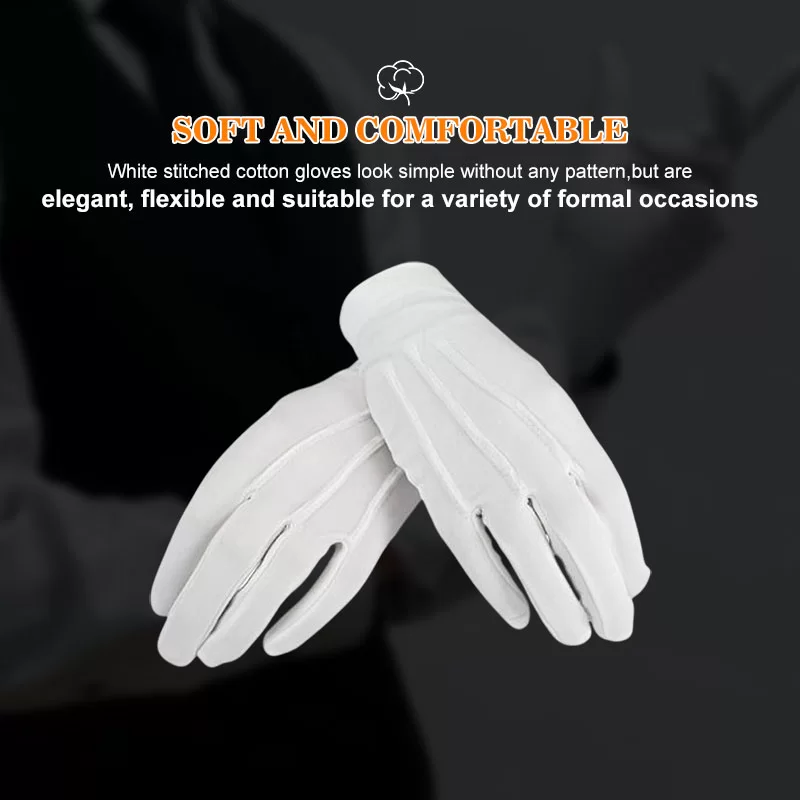
Product Snapshot: Elegant Etiquette Gloves for Formal Events and Special Occasions
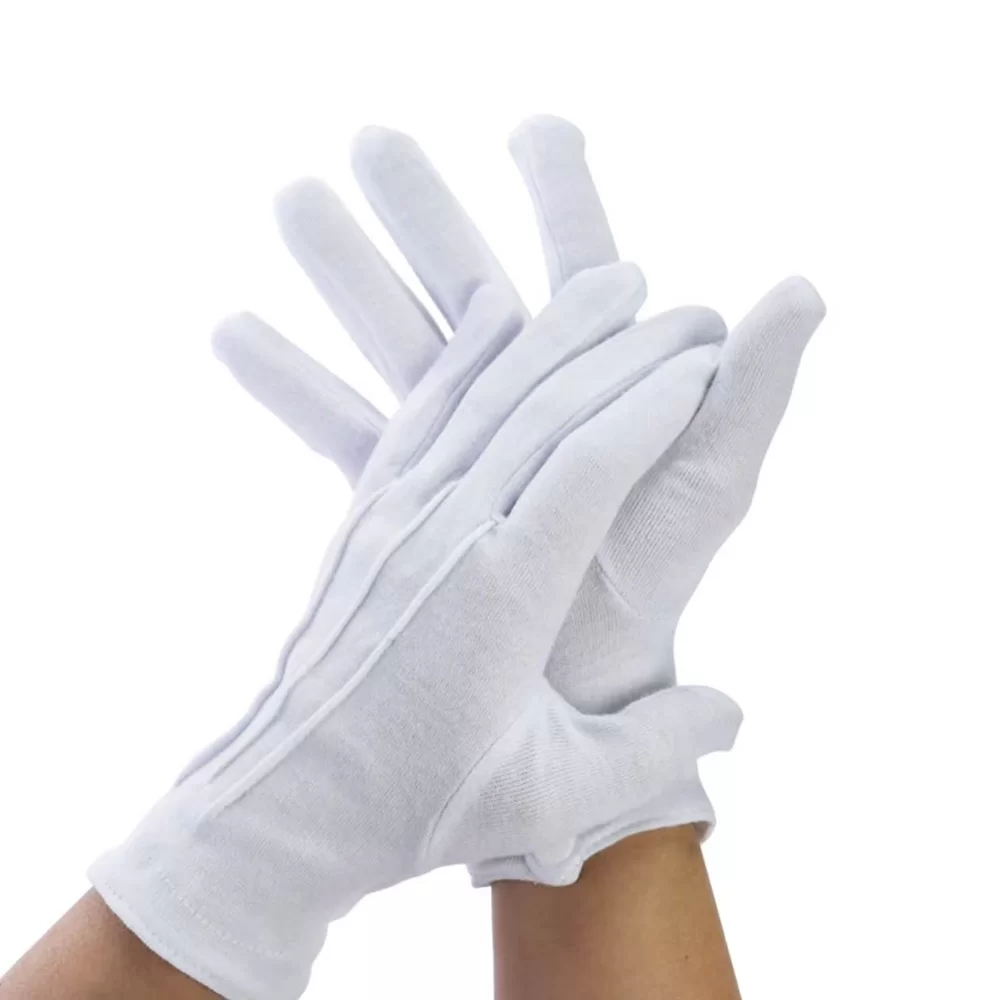
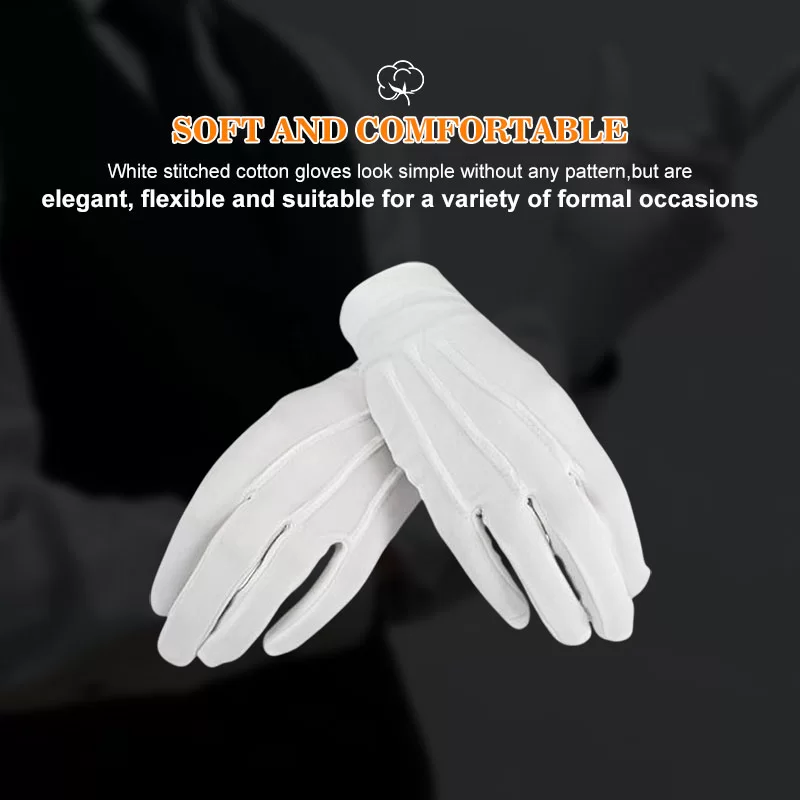
Origin: No.553 Taihua Street, Shijiazhuang, Hebei, China. The gloves are cut from high-quality, skin-friendly fabric and stitched for uniformed teams—military and police honor guards, welcome lines, conference services, and stage performances. In short: a minimal accessory that telegraphs respect.
| Parameter | Spec (≈ real-world use may vary) |
|---|---|
| Fabric | Combed cotton/poly blend (≈ 180–220 g/m²) for colorfastness + breathability |
| Construction | Cut-and-sew, overlock seams, turned cuff |
| Color | Ceremonial white; custom black/navy on request |
| Sizes | XS–XL (±0.5 cm tolerance) |
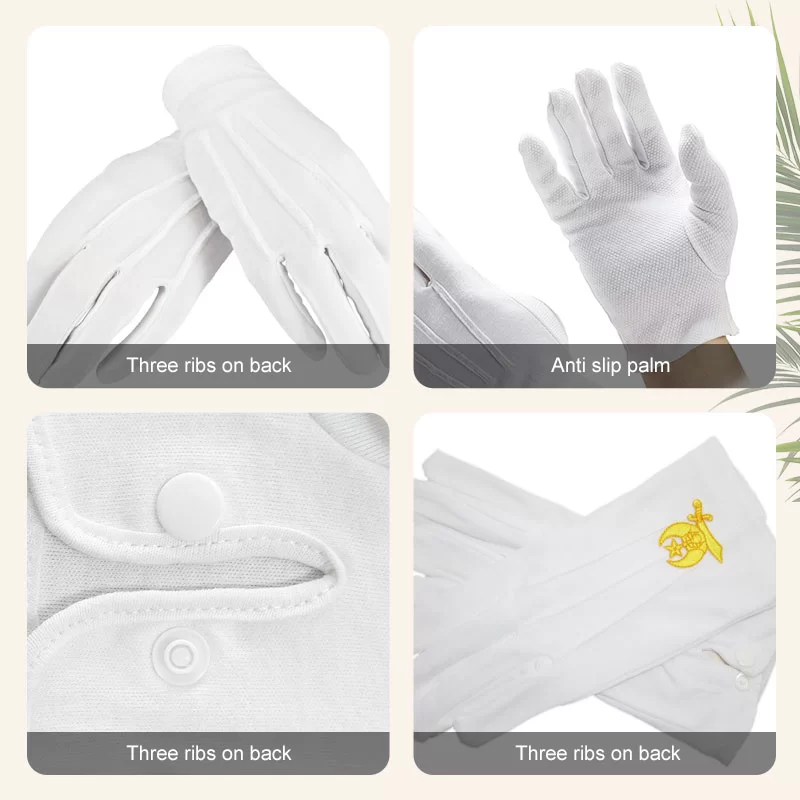
| Finish | Low-lint surface, soft hand feel; optional anti-slip palm dots |
| Care | Machine wash cold; 20–40 cycles typical service life depending on duty |
| Compliance | Guided by EN ISO 21420 innocuousness; OEKO‑TEX options |
Process & Quality Flow (brief, but useful)
- Materials: low‑lint cotton/poly yarns; colorants screened for REACH‑listed substances.
- Cutting & stitching: pattern grading per size set; overlock and lockstitch for seam integrity.
- Finishing: light preshrink, lint removal, whitepoint check under D65 lighting.
- Testing: ISO 105‑C06 wash fastness; ISO 105‑X12 rubbing; ISO 3071 textile pH; dimensional stability to washing; needle/metal detection for FOH safety.
- Service life: around 6–12 months in ceremonial rotation; 2–4 months in daily concierge duty.
Where they shine
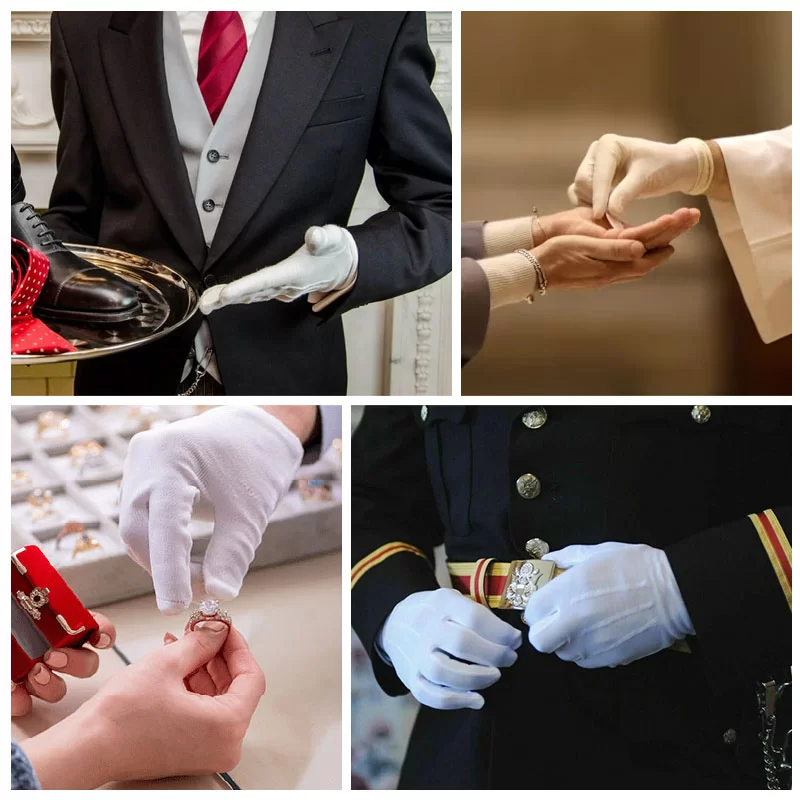
Honor guards, hotel concierges, airline ground staff, luxury retail, museums (artifact handling policies vary), theater and ceremonial teams, even dignified funeral services. The advantages of Etiquette Gloves here are obvious: uniformity, clean presentation, lint control, and a calm, steady grip for programs and flags.
Vendor Landscape (field notes)
| Vendor | Strengths | Lead Time | MOQ | Certs (≈) | Price Range |
|---|---|---|---|---|---|
| HMD Glove (Hebei) | Uniform programs, size runs, steady QC | 10–20 days | 300–500 pairs | ISO 9001, OEKO‑TEX options | Mid, value for volume |
| Trading Co. B | Broad catalog, flexible sourcing | 15–30 days | 500+ pairs | Varies by batch | Low–Mid |
| Boutique Tailor C | Small runs, bespoke embroidery | 20–35 days | 50–100 pairs | Limited formal certs | High |
Customization & Options
- Embroidery: unit crests, monograms, discreet numbering.
- Palm choices: smooth, micro-dot, or discreet grip lines.
- Lengths: wrist, mid-forearm; color shifts for black-tie teams.
- Touchscreen pads for clipboard/tablet users front-of-house.
Field Results (sample QA data)
- Wash fastness to ISO 105‑C06: Grade 4–5 (whitepoint retention).
- Rubbing fastness ISO 105‑X12 (dry): Grade 4–5; (wet): Grade 3–4.
- pH of aqueous extract ISO 3071: 6.2–6.8 (skin‑friendly range).
- Shrinkage after 3 cycles: ≈1.5–2.0% (within spec).

Mini Case Files
Police Honor Guard, provincial level: adopted Etiquette Gloves with micro‑dot grip to stabilize flagstaffs in windy ceremonies; feedback was “cleaner hand lines, fewer drops.” Luxury retail launch: ushers wore Etiquette Gloves with black piping—brand team reported “photo‑ready hands” and zero lint on gift boxes. Small details, big optics.
Certifications like ISO 9001 for manufacturing systems and OEKO‑TEX STANDARD 100 for textile safety are available from serious producers; always request the latest scope and test date. And if you’re handling heritage artifacts, confirm the museum’s glove policy first—sometimes cotton is in, sometimes nitrile.
Authoritative references
- EN ISO 21420:2020 – General requirements for gloves [https://www.iso.org/standard/71624.html]
- ISO 105 series – Textiles, color fastness tests [https://www.iso.org/committee/53390/x/catalogue/p/1/u/1/w/0/d/0]
- ISO 3071 – Textiles, pH of aqueous extract [https://www.iso.org/standard/69473.html]
- OEKO‑TEX STANDARD 100 – Product Class guidelines [https://www.oeko-tex.com/]