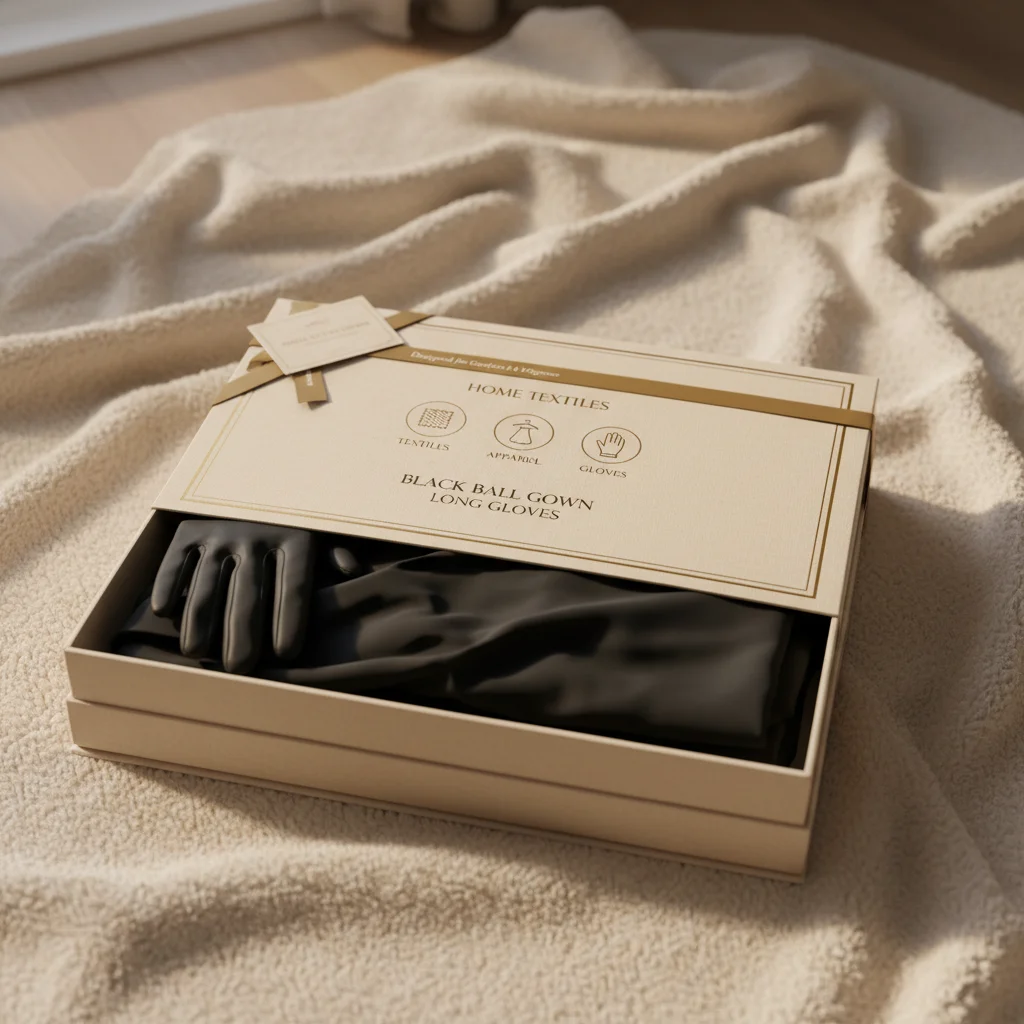
Equestrian Riding Gloves with Breathable Grip & Touchscreen
Field Notes on Modern Equestrian Riding Gloves
When riders talk kit, the quiet hero is often the Equestrian Riding Gloves. To be honest, once you’ve felt reins in a summer shower without slipping—or posted through a long schooling session without hotspots—you get why. Today’s best models blend tactile feel, structured grip, and breathability in a way that, a decade ago, felt like wishful thinking.
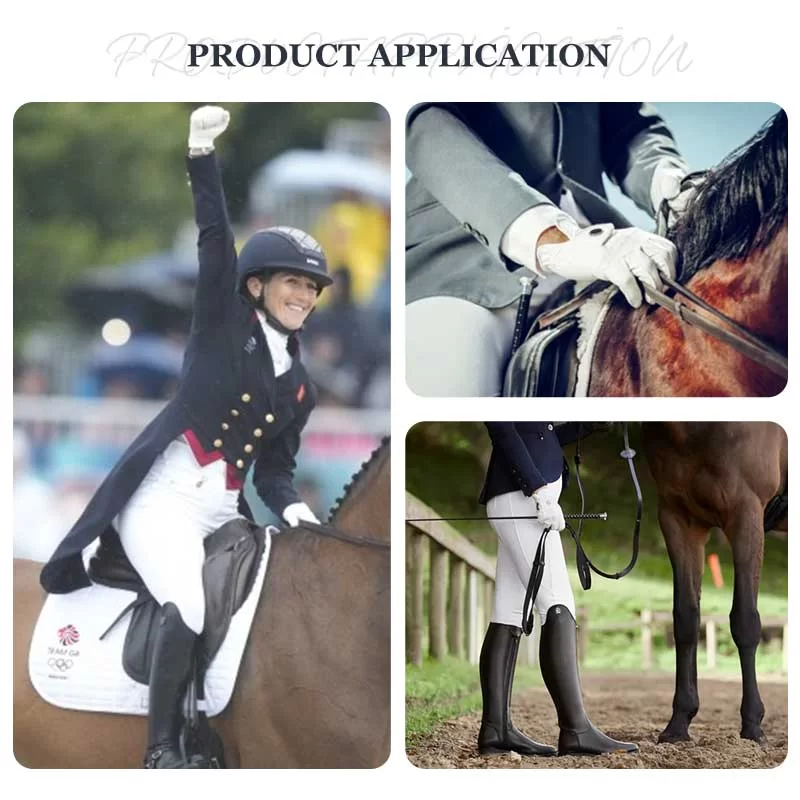
What’s changing (and why it matters)
Two big trends: micro‑ventilated synthetic leathers that don’t turn slick when wet, and smarter patterning around the knuckles to reduce bunching on contact. Actually, the second trend may be the sleeper hit—less fabric bulk equals cleaner half‑halts. Many customers say they’re riding tighter lines with less rein noise. Could be placebo; still, the feedback keeps stacking up.
Technical core: materials, build, and tests
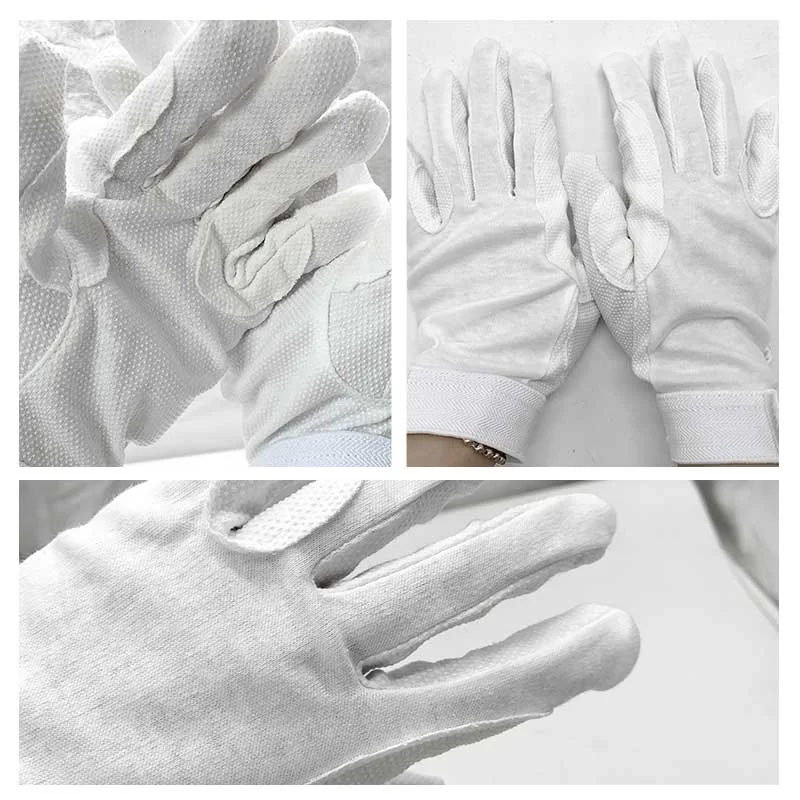
- Palms: micro‑fiber synthetic leather with embossed texture for wet/dry μ stability.
- Back of hand: 4‑way mesh or Lycra for breathability (≈120–180 GSM).
- Reinforcement: double layer between index/middle fingers; boxed fingertips to reduce seam shear.
- Closure: low‑bulk hook‑and‑loop; elasticated cuff so it vanishes under a sleeve.
- Stitching: high‑tenacity poly thread; 7–9 SPI in high‑stress zones.
| Feature | Typical spec (real‑world ≈) | Test/Standard |
|---|---|---|
| Grip coefficient on leather rein | Dry μ ≈ 0.78; Wet μ ≈ 0.62 | Internal jig; EN ISO 21420 fit guidance |
| Abrasion resistance | ≥ 30,000 cycles (palm) | ISO 12947 Martindale |
| Tear/Seam strength | EN 388 Level 2 tear; seams ≥ 12 N | EN 388; EN ISO 21420 |
| Service life | ≈ 12–18 months of 4x/week use | Field reports; usage dependent |
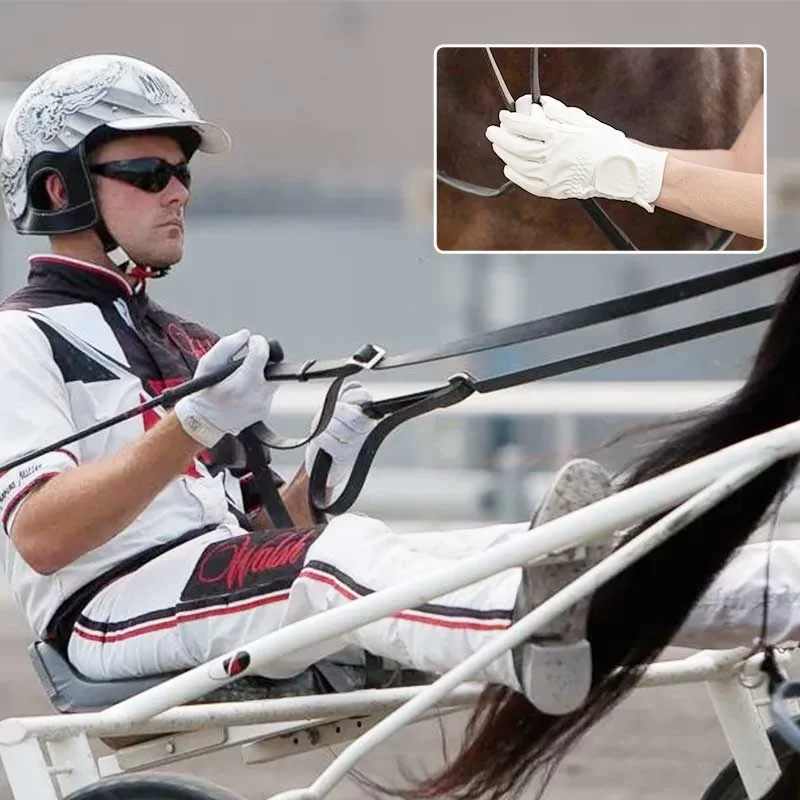
Process flow (how they’re made)
Material QC → die‑cut panels → pre‑shrink/heat‑set mesh → box‑finger assembly → palm reinforcement placement → flatlock + bartack stitching → closure install → washing/relax → 100% visual check → size/fit audit (AQL 2.5). Random lots undergo abrasion, seam pull, and perspiration colorfastness tests. Compliance typically includes EN ISO 21420, selected EN 388 metrics, and REACH‑restricted substances. OEKO‑TEX materials are increasingly requested, which, frankly, is good news for skin comfort.
Where they shine
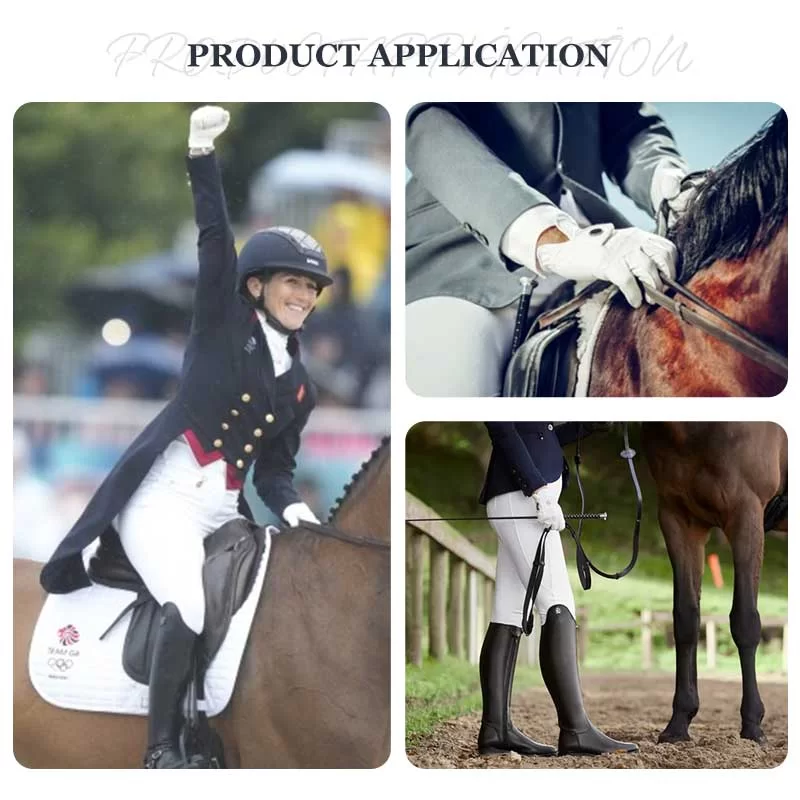
- Daily schooling and clinics: consistent feel across reins, leather or web.
- Show jumping and eventing: wet‑grip texture pays off on early‑morning grass.
- Dressage: thin palms keep the conversation with the bit subtle.
- Riding schools: durability + easy wash is a budget saver.
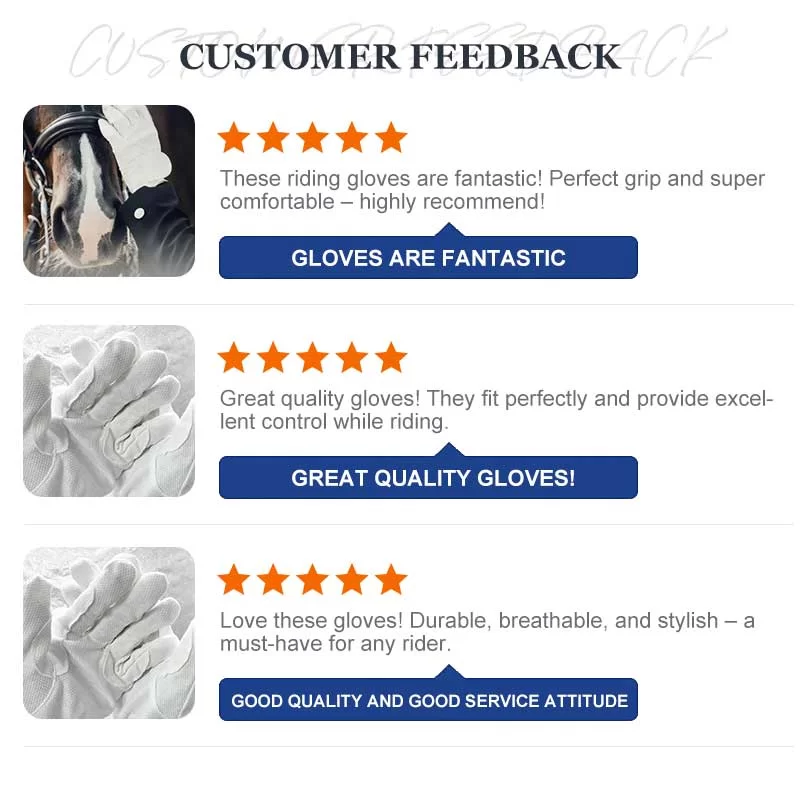
Feedback we hear a lot: “No hotspots on the ring finger after 40 minutes,” and “surprisingly breathable in July.” I guess we’ve all sweated through a pair; this is different.
Customization
Logos (TPU/appliqué), contrast piping, touchscreen tips, winter lining (micro‑fleece or Thinsulate), extended cuffs for eventers, and bespoke sizing runs for teams. MOQs vary, but small team orders are doable.
Vendor snapshot (quick compare)
| Vendor | Origin | Certs | Lead Time | Notes |
|---|---|---|---|---|
| Equestrian Riding Gloves by HMD | No.553 Taihua St, Shijiazhuang, Hebei, China | EN ISO 21420; REACH; OEM/OEM audits | ≈ 25–35 days | Strong value; flexible customization |
| Roeckl Sports | Germany | OEKO‑TEX; in‑house tests | ≈ 30–45 days | Premium materials; higher price |
| SSG | Canada | General PPE norms | ≈ 20–30 days | Rugged, schooling‑friendly |
| Heritage | USA | EN ISO 21420 (selected) | ≈ 25–40 days | Sporty fit; good summer options |
Mini case studies (real barns, real sweat)
- Dressage yard, Florida: switching to Equestrian Riding Gloves with micro‑vent palms cut rein slip complaints by ≈ 40% in summer clinics; riders reported lighter fingers at canter transitions.
- Riding school, UK: a reinforced index/middle channel reduced novice blister incidents by ≈ 60% over 10 weeks; gloves survived 25+ machine washes without palm glazing.
Compliance, safety, and what to check
Look for EN ISO 21420 fit/innocuousness, selected EN 388 mechanical data, REACH compliance, and—if you’re fussy about dyes—OEKO‑TEX Standard 100. For competition riders, ensure styling aligns with current FEI tack and attire rules. Quick fit tip: close your fist; if the palm skin tents, size up.