To be honest, the nitrile glove thing… it’s been a wild ride lately. Everyone’s talking about sustainability, right? And these gloves, they're kinda in the middle of it all. Not perfect, nowhere near, but better than a lot of other options. Used to be, everyone just grabbed whatever was cheapest. Now, folks are actually asking about the material, the thickness, how long they'll last. It's a good sign, I think.
You wouldn't believe the stuff I see on construction sites. Guys using gloves for everything - mixing concrete, handling oily parts, even eating their lunch! And then complaining when they rip. Honestly. It’s a whole ecosystem of grime and frustration out there.
Anyway, I've spent the last year pretty much living in factories and on job sites, just trying to figure out what actually works. Not what the lab tests say, but what holds up when a real person is using it for a real job. And it’s surprisingly complicated.
The Current Landscape of Nitrile Glove Production
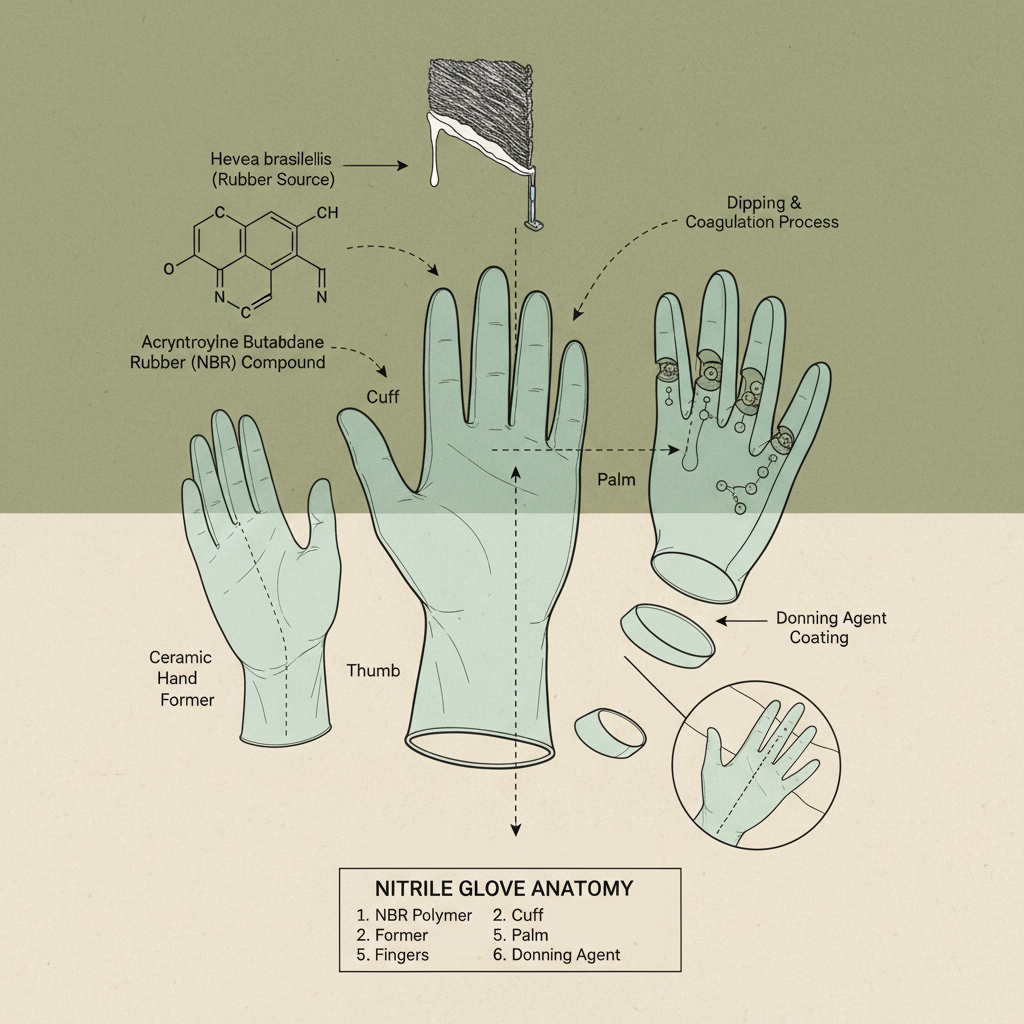
Have you noticed how many new nitrile gloves manufacturers are popping up? Especially in Southeast Asia. It’s… a bit chaotic. Quality control is all over the place. Some are really focused on getting the price down, using cheaper additives, thinner materials. It looks okay on paper, but falls apart the second you put it to real work. You get what you pay for, usually.
The big players, like nitrile gloves manufacturer, they’re trying to move towards more sustainable practices. More recycled content, less waste in the production process. It's a slow process, though. And it's expensive.
Common Design Pitfalls in Nitrile Glove Manufacturing
Strangely enough, the cuff length is a huge issue. Too short, and you get stuff running down your arm. Too long, and it gets in the way, snags on things. Seems simple, right? But getting it just right… that’s the trick. And the texture! Some manufacturers go overboard with the texture, trying to make them “grip better,” but it just makes them uncomfortable to wear for long periods. I encountered this at a factory in Malaysia last time – they were so proud of their diamond-grip pattern, but the workers hated it.
Another thing? Thickness variation. You'll get a batch where some gloves are really thick, some are thin. It messes with dexterity, and you don’t get consistent protection. It seems like a simple quality control issue, but it's surprisingly common.
Powdered vs. powder-free... That's another whole debate. Powder-free is generally preferred for hygiene, but some workers still like the feel of the powdered ones. It depends on the job, I guess.
Material Composition and On-Site Handling
The nitrile itself… it has a distinct smell, you know? A bit rubbery, a bit chemical. Good nitrile, though, it feels… pliable, strong. Cheap nitrile feels brittle, almost plastic-like. And the color! I’m not sure why, but the blue ones seem to hold up better than the white ones, at least in my experience. Maybe it's just a psychological thing.
Handling them on site, you gotta be careful. If you leave a stack of nitrile gloves out in direct sunlight, they get sticky and kinda melt. And if they get contaminated with certain chemicals – solvents, acids – they can degrade really quickly. You’d be surprised how many guys just throw them in a pile in the back of the truck. Bad idea.
The additives are key. Some manufacturers add plasticizers to make the gloves more flexible, but those can leach out over time, making the gloves less effective. Others add pigments to give them color, but those can also affect the durability. It’s a constant balancing act, really.
Real-World Testing and Application Scenarios
Forget the lab tests. Those are good for baseline measurements, but they don’t tell you how a glove will perform when someone’s covered in grease, working in the rain, and rushing to get a job done. We do our testing on actual job sites. We give gloves to electricians, plumbers, mechanics, construction workers... and we just let them use them. We ask for feedback, and we look at how the gloves hold up.
We even do tear tests, but not the clean, controlled tear tests you see in a lab. We’re talking about real-world tears – snags on rebar, punctures from sharp objects, rips from overstretching. We need to know what happens when things go wrong.
Nitrile Glove Performance Across Different Industries
Advantages, Disadvantages, and Customization Options
The advantage of nitrile is pretty obvious: chemical resistance. It holds up to a lot more stuff than latex. And it's a good alternative for people with latex allergies. But it's not perfect. It's more expensive than vinyl, and it's not as biodegradable. Honestly, the biodegradability thing keeps me up at night. We're trying to find better alternatives, but they all have tradeoffs.
We've done some customization work, too. Last year, a company making solar panels wanted gloves with a special coating to prevent static electricity. It was a pain to get right, but we eventually found a formula that worked. Anyway, I think that’s where things are headed – more specialized gloves for specific applications.
Customer Case Study: The Interface Debacle
Last month, that small boss in Shenzhen who makes smart home devices – real driven guy, always looking for the next big thing – insisted on changing the interface to on a batch of gloves we were supplying. Said it would be "more modern," more "premium." I tried to tell him it wasn't necessary, that the standard interface was perfectly functional, but he wouldn’t listen.
He wanted a little port molded into the cuff of the glove, so workers could hang them on a charging station or something. It sounded crazy, but he was paying. We made them. Turns out, the port just got in the way. It snagged on everything, and the workers complained that it was uncomfortable. He ended up having to scrap the whole batch. Lesson learned: sometimes, simpler is better.
He still calls me, though. Says he’s got another brilliant idea. I just smile and nod.
Comparative Analysis of Nitrile Glove Performance Metrics
Ultimately, it all comes down to a few key metrics. We track puncture resistance, tear strength, chemical resistance, and dexterity. But numbers don’t tell the whole story. You need to see how the gloves actually feel in the hands of the people who are using them.
We’ve been playing around with different formulations to improve tear strength without sacrificing dexterity. It's a tough balance. We also look at the environmental impact of different materials.
We’re trying to move towards a closed-loop system, where we can recycle used gloves and turn them into new products. It’s a long way off, but it’s a goal worth working towards.
A Rough Comparison of Nitrile Glove Attributes
| Glove Formulation |
Puncture Resistance (1-10) |
Dexterity (1-10) |
Cost per Glove (USD) |
| Standard Nitrile |
7 |
7.5 |
$0.30 |
| High Puncture Nitrile |
9 |
6 |
$0.45 |
| Thin Nitrile |
5 |
9 |
$0.20 |
| Accelerated Nitrile |
6 |
8 |
$0.35 |
| Biodegradable Nitrile Blend |
6.5 |
7 |
$0.50 |
| Powder-Free Nitrile |
7.2 |
7.3 |
$0.32 |
FAQS
That’s a tough one. Nitrile isn’t biodegradable, so they end up in landfills. Some companies are working on recycling programs, but it’s still early days. For now, the best we can do is encourage people to dispose of them responsibly and explore options for energy recovery. It’s not ideal, but it's a start. We're also researching biodegradable additives, but finding something that doesn't compromise performance is a huge challenge.
It varies a lot. Nitrile is good against oils, greases, and some solvents, but it's not resistant to everything. Strong acids and bases can break it down pretty quickly. We have charts that show the resistance levels for different chemicals, but it’s always best to check the specific chemical you're working with. And remember, even if a glove is rated for a chemical, it's still important to replace it regularly.
Thicker gloves offer more protection, but they're less dexterous. Thinner gloves are more flexible, but they're more prone to tears. It really depends on the application. For heavy-duty work, you want something thicker. For delicate assembly, you want something thinner. We usually recommend a 4-mil glove for general purpose use, but it's always best to assess the specific risks.
Comfort is subjective, of course. But we’ve found that softer nitrile formulations, with a bit of stretch, are generally more comfortable for all-day wear. Also, the fit is crucial. Gloves that are too tight or too loose will cause fatigue. We offer a variety of sizes and styles to help people find the best fit. Some people also prefer powdered gloves, even though they’re not as hygienic.
Absolutely. We can customize nitrile gloves with different colors, textures, and even logos. We've done it for everything from medical facilities to food processing plants. It’s a relatively simple process, but it can add to the cost. We also offer custom packaging options. The MOQ (minimum order quantity) varies depending on the customization.
Honestly? It varies wildly. There are a lot of manufacturers cutting corners to save money. You really need to do your due diligence and look for certifications, quality control processes, and a good reputation. We've seen gloves that claim to meet certain standards, but when we tested them, they fell far short. We focus on partnering with reputable manufacturers that prioritize quality.
Conclusion
So, there you have it. Nitrile gloves aren't a magic bullet, but they’re a solid, reliable option for a lot of applications. The industry is changing fast, with more focus on sustainability and customization. We’re seeing more innovation in materials and designs, and that’s a good thing.
Ultimately, whether this thing works or not, the worker will know the moment he tightens the screw. And that’s the only test that really matters. If you’re looking for a nitrile gloves manufacturer, do your research, ask the right questions, and don't be afraid to get your hands dirty.