
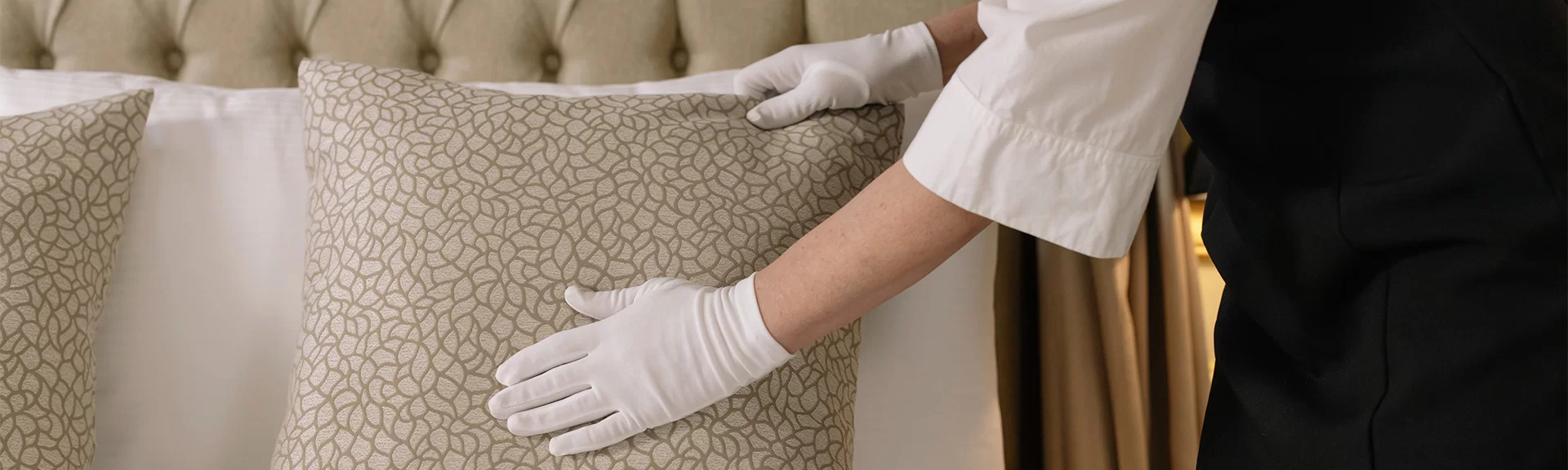
Maintaining a pristine image during high-profile public appearances requires more than just a clean uniform; it demands specialized equipment that balances aesthetic rigor with functional reliability. For ceremonial guards, orchestra conductors, and official security details, the choice of handwear is a critical detail that impacts both the visual prestige of the event and the operational stability of the personnel involved.
The challenge lies in finding a textile solution that offers the formal "crispness" of traditional white gloves while integrating modern grip technologies. Many standard cotton options fail during extended wear, sliding off the wrist or losing grip on essential equipment like batons and flags, which can compromise the precision of a choreographed performance or official duty.
Understanding the technical nuances behind professional-grade textiles allows procurement officers and event coordinators to make informed decisions. By partnering with a specialized hand gloves manufacturing company, organizations can secure equipment that meets international standards for durability and performance.

The Evolution of Ceremonial Handwear

Traditionally, ceremonial gloves were viewed primarily as aesthetic accessories, meant to denote status and cleanliness. Basic cotton knits were the standard, but these often lacked the structural integrity required for active duty, frequently slipping or wearing through at the fingertips during repetitive motions.
Modern industrial textile manufacturing has shifted this paradigm. The integration of high-grade pure cotton with targeted polymer enhancements allows for a product that maintains its formal white appearance while performing as a piece of professional equipment. This evolution ensures that the wearer does not have to choose between looking the part and performing the task effectively.
Technical Engineering of Formal Textiles
The core of a professional ceremonial glove lies in the material purity. Utilizing 100% high-grade pure cotton is essential not only for the stark white color but for breathability. In outdoor parades, where personnel may stand for hours under direct sunlight, the fabric must facilitate moisture wicking to prevent hand fatigue and skin irritation.
Beyond the fabric, the construction details define the glove's lifespan. A classic three-seams design on the back of the hand is not merely traditional; it provides a structured fit that prevents the fabric from bunching, ensuring a sharp, streamlined silhouette. This is complemented by a seamless inner craft that minimizes internal friction, critical for users who wear gloves for extended shifts.
The closing mechanism is another engineering focal point. While open cuffs are common in basic gloves, a professional-grade version utilizes an adjustable snap-button cuff. This ensures the glove remains fixed to the wrist regardless of the wearer's movements, eliminating the need for constant adjustment during high-stakes performances.
Balancing Aesthetics and Operational Control
One of the most significant conflicts in ceremonial wear is the "grip gap." Polished surfaces, such as metal batons or wooden flag poles, become slippery when paired with standard smooth cotton. This creates a safety risk and an aesthetic distraction if the wearer struggles to maintain a secure hold.
The integration of dense silicone beaded grips on the palms and fingers solves the tension between formal aesthetics and physical utility, providing high-friction stability without altering the glove's exterior professional appearance.
By strategically placing these silicone beads, a manufacturing company can ensure that the glove's tactile response is optimized for the specific tools of the trade. This allows orchestra conductors to maintain precise baton control and security personnel to handle equipment with confidence, all while maintaining the required ceremonial standard.
Grip Stability Performance Metrics
When evaluating different glove types for professional use, the "stability index" is a key consideration. Standard cotton gloves often score low due to their low coefficient of friction, whereas beaded ceremonial gloves provide a significant uplift in grip reliability across various materials.
This qualitative assessment helps organizations understand the return on investment. While beaded gloves may require a slightly different maintenance routine, their ability to prevent equipment slippage during critical movements makes them the only viable choice for high-stakes official duties.
Figure 2. Relative Grip Stability Index by Glove Type
Application Scenarios in Professional Service
In a typical industrial or government setting, ceremonial gloves are deployed across diverse roles. For police uniforms and security personnel, the gloves must withstand the rigors of duty while remaining spotless. The use of reinforced stitching ensures that the gloves can be machine washed and reused, providing a cost-effective solution for large teams without sacrificing the formal aesthetic.
Stage performers and orchestra conductors face a different challenge: the need for tactile precision. The silicone beading on the fingertips allows for a secure grip on batons and instruments, while the breathable cotton prevents perspiration from affecting the grip or causing discomfort during a long symphony performance.
Future Trends in Industrial Sewing Gloves
The trajectory of the textile industry is moving toward "intelligent specialization." We are seeing a transition where gloves are no longer general-purpose but are engineered for specific biological and mechanical interactions. For ceremonial wear, this means a greater focus on hypoallergenic materials and advanced moisture-management fabrics.
Another emerging trend is the demand for sustainable production. As global organizations shift toward greener procurement, manufacturing companies are optimizing their supply chains to reduce waste in the cutting process and utilizing long-staple cotton for increased durability, which reduces the frequency of replacement.
Finally, the customization of fit is becoming a priority. With diverse team demographics, the shift toward unisex sizing guides and adjustable closure systems—like the snap-cuff—allows for a more inclusive and professional fit across different hand and wrist sizes.
Procurement Framework for Bulk Ordering
When sourcing from a hand gloves manufacturing company for large-scale events, the focus should be on the "Total Cost of Ownership" rather than the initial unit price. Low-cost alternatives often lack reinforced stitching, leading to rapid wear and frequent replacement.
Buyers should evaluate the quality of the silicone bead density and the purity of the cotton. These factors directly impact the longevity of the product and the comfort of the personnel. A strict inspection process for stitching and material consistency is the only way to ensure a uniform look across a large group of performers.
The following framework provides a relative comparison between standard cotton options and professional beaded ceremonial gloves to assist in the decision-making process.
| Evaluation Factor | Standard Cotton | Beaded Ceremonial | Operational Impact |
|---|---|---|---|
| Grip Stability | Low (Slippery) | High (Silicone) | Equipment Security |
| Wrist Security | Open Cuff | Adjustable Snap | Fit Consistency |
| Hand Fatigue | Moderate Friction | Seamless Interior | Long-wear Comfort |
| Durability | Low (Single use) | High (Washable) | Replacement Cost |
| Formal Appeal | Basic Design | Three-Seams Design | Professional Image |
| Breathability | Standard | High-Grade Pure Cotton | Thermal Comfort |
Questions & Answers
The three-seams stitching is a traditional hallmark of formal and military glove design. Beyond its aesthetic value, it provides a structured fit that conforms better to the anatomy of the hand, preventing excess fabric from bunching on the back of the hand and ensuring a crisp, professional silhouette required for official government duties and ceremonies.
Silicone beads are strategically placed on the palms and fingertips to increase the coefficient of friction. This is critical for professionals handling smooth objects like flags, batons, or equipment, as it prevents accidental slippage during movements without compromising the softness of the cotton fabric or the formal look of the glove.
Yes. By using 100% premium pure cotton, these gloves are naturally breathable and skin-friendly. This allows for effective ventilation, keeping the hands dry and comfortable even during long outdoor summer parades, which is a significant improvement over synthetic blends that often trap heat and moisture.
Professional ceremonial gloves are designed for longevity. With reinforced stitching and high-durability cotton fabric, they are machine washable and reusable. Following a comprehensive maintenance guide helps keep them pristine, offering a higher long-term value compared to disposable or low-quality cotton alternatives.
An adjustable snap-button cuff ensures a secure, customized fit for various wrist sizes. This prevents the glove from sliding down during activity, which is essential for personnel in active roles such as security or stage performance, where maintaining a tidy appearance is mandatory and constant adjustment is distracting.
These products are essential for professional service and performance sectors. This includes police departments for ceremonial guards, security firms for high-profile events, orchestral groups for conductors, and official government units involved in formal parades and state functions where image and precision are equally weighted.
Final Thoughts
The intersection of formality and function is where the true value of professional ceremonial handwear is found. By moving beyond basic cotton and embracing technical enhancements like silicone beading and snap-cuff closures, organizations can ensure that their personnel project an image of absolute precision and professionalism.
Ultimately, the choice of a manufacturing partner depends on the ability to deliver consistency at scale. When durability, grip stability, and breathability are integrated into a single garment, the resulting equipment does more than just complete a uniform—it empowers the wearer to perform their duties with confidence and elegance.





Christopher Wilson
If you are interested in our products, you can choose to leave your information here, and we will be in touch with you shortly.


